The Etymological Court #17: Monarchism
One accountable head: the original claim. The divine right came later.
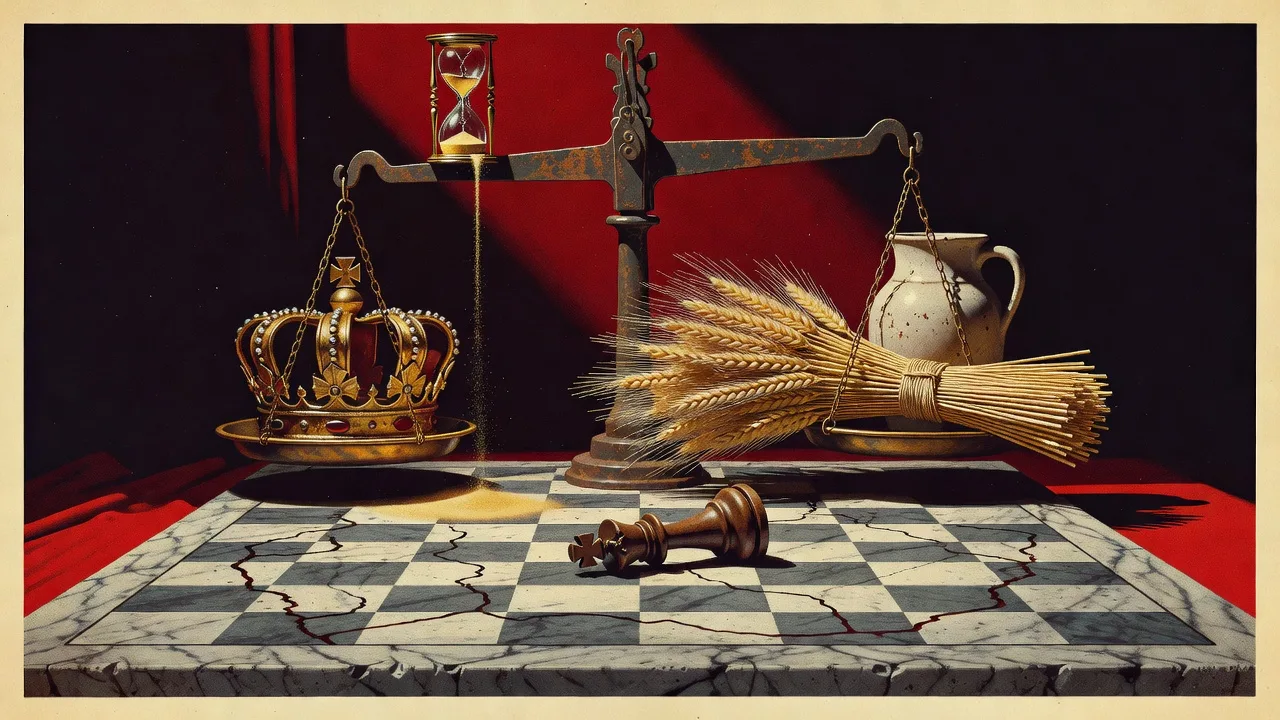
One accountable head beats many unaccountable ones. Then divine right arrived and made the head unaccountable too.
The Word
monarchēs. Greek: monos, alone, plus archein, to rule. Rule by one.
The word is ancient. The practice is older; every chief and war-leader was running it before Greece named it. Notice what the word doesn’t say. It doesn’t say one man’s will. It says one man, set apart, alone at the top, the single point where responsibility lands. The oldest meaning isn’t the right to rule. It’s the condition of having no one else to blame.
What It Wanted
Here’s the best case for monarchy, and the court gives it a full hearing before swinging.
Rule by committee was the original catastrophe. When the nobles each hold a sword and no one holds them all, the result is factional war: sons against fathers, provinces against provinces. One accountable head ends the argument. The crown checks the mob, which will vote itself the treasury on a good day and burn the city on a bad one; and it checks the oligarchs, who will carve the kingdom into private estates the moment the public eye blinks. The king is the one person whose interest is the whole, because the whole is what he’s stuck with.
Add continuity. Succession is the question republics keep fumbling. When the office is elective, the office is a prize; every handover is a civil war in miniature. Heredity settled it without a war: the crown passes, the state does not, and the thing you built survives your death.
Add stewardship. The old coronation oath is the whole doctrine in one sentence: the king swears to defend the laws before the people swear to obey him. He’s not the owner. He’s the trustee. Accountable to law, to custom, to the ancestors who lent him the crown and the descendants who will demand it back.
And this is why honest people, people who loved liberty, chose it. Locke didn’t argue for republics. He argued for a crown checked, the king bound by law, removable if he broke it. That’s the constitutional case, and 1688 is its founding document: James II removed for governing as if the law didn’t bind him, replaced by a crown that had to swear to Parliament. The Glorious Revolution was the first school’s greatest victory. It deserves to be remembered as that.
Why It Mattered
Because the problem was real. Factional civil war wasn’t a hypothetical; it was the default condition of the ancient and medieval world. Divided command kills: two generals, two laws, two courts, and the first disagreement becomes the second war.
Monarchy answered three questions nothing else could answer. Who commands? One head, one voice, one final say. Who decides when the law is silent? The same head, accountable for the decision. And who is in charge when the ruler dies? The succession, settled by blood instead of by ballot, by calendar instead of by campaign.
The answer had teeth because the alternative was worse. A bad king is a misfortune. A dozen warlords is a catastrophe. The first school knew this, and the court acknowledges it: monarchy existed because the alternatives, in its era, were worse.
The First School
The claim, plain: one accountable head beats many unaccountable ones.
Ancient kingship was a sacred trust. The king was answerable, to the gods, to the law, to the oath he swore at his crowning. The coronation oath is the original contract: the crown is a job with duties, and the people’s obedience is conditional on those duties being performed. The doctrine’s own logic makes the tyrant a contradiction: a king who stops being accountable has broken the trust, and the trust was the whole point.
The first school’s modern form was the constitutional monarchy: the crown under law. 1688, Locke, the crown checked, not abolished. The king remains the accountable head; the law is the leash. For a brief, bright historical moment, the word meant exactly what it said: rule by one, accountable by one.
That was the form that worked. Note what that form looked like, because the court is about to compare it to everything else.
What Happened
The usurpers came, and they came for the one thing that made the doctrine work: the accountability.
Absolutism arrived dressed as completion: the divine right of kings. The argument: the king is accountable to God alone. In practice: the king is accountable to no one, because God doesn’t hold hearings. The trustee stopped being answerable to law, custom, or oath. The stewardship became ownership.
Louis XIV put the theft in four words: “L’état, c’est moi.” I am the state. The head didn’t rule the body; the head was the body. The first school said one accountable head. Absolutism said one head, accountable to nothing, holding everything.
And then came the record. The divine-right kings were not the answer to factional chaos; they were the faction that won. The check on the mob became the mob’s whip. The trustee became the proprietor, and the proprietor’s family treated the kingdom the way owners treat property: sellable, divisible, disposable. Wars fought for dynastic vanity. Famines managed for tax revenue. Successions that turned into continental wars over who got the throne, the people in the kingdom treated as furniture to be moved with it.
The first school’s honest form, the law-bound crown, was the exception. The rule was what absolutism made it: one head, no head above him, and no way to make him answer.
The Verdict
Monarchism = the claim that one accountable head beats many unaccountable ones. The record: mostly bad. The constitutional monarchies that functioned are republics with a hereditary figurehead.
The first school wins the word. Stewardship, not ownership: the crown as a trust, not a property. And the court reads the record honestly: the first school’s honest form was rare, brief, and in its functioning examples indistinguishable from a republic that kept the costume. The crown that worked was the crown that no longer ruled.
That is the entire tragedy of monarchy, stated cleanly: the version that justified the word gave up the substance; the version that held the substance gave up the word. Locke and 1688 handed the crown to Parliament and called the result monarchy. The actual monarchs, the ones who ruled, ruled by divine right and called the result obedience.
The Door
Can they leave?
The absolutist state was the original lock. The subject could not leave; exit was treason, the border was a wall, and the body belonged to the crown. The divine-right king didn’t rule a nation of members. He ruled a collection of subjects, and the word subject is the lock’s name.
A monarchy you can leave is a voluntary arrangement. The constitutional monarchies earn this: you can walk out, renounce, emigrate, leave the inheritance behind, and the crown cannot stop you. That is the difference between a figurehead and a tyrant. The moment exit is possible, the crown has lost its power to compel, and what remains is ceremony: history wearing a uniform.
So the test this court hands every monarchist is the same test it hands every other -ism: the subject must be able to leave with their person, their property, and their reputation intact. If the door is open, the monarchy is honest, because it rules only the willing. If the door is sealed, it is not stewardship. It is a prison with a bloodline, and the first school would not recognize it.
The first school’s own logic says it. The oath was the leash. The exit is the leash that cannot be cut.
Series: The Etymological Court · Previous: Maoism · Next: Fascism