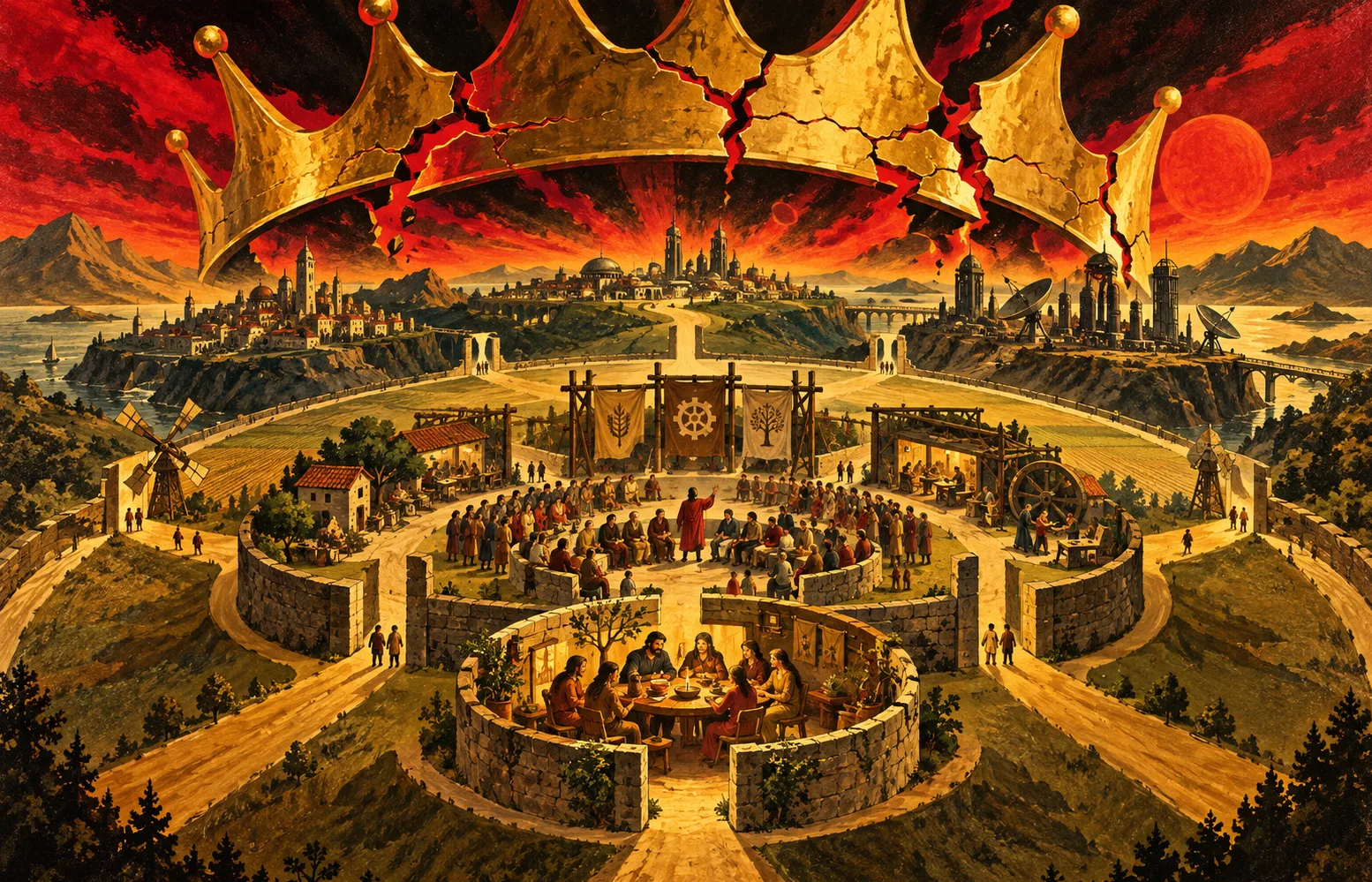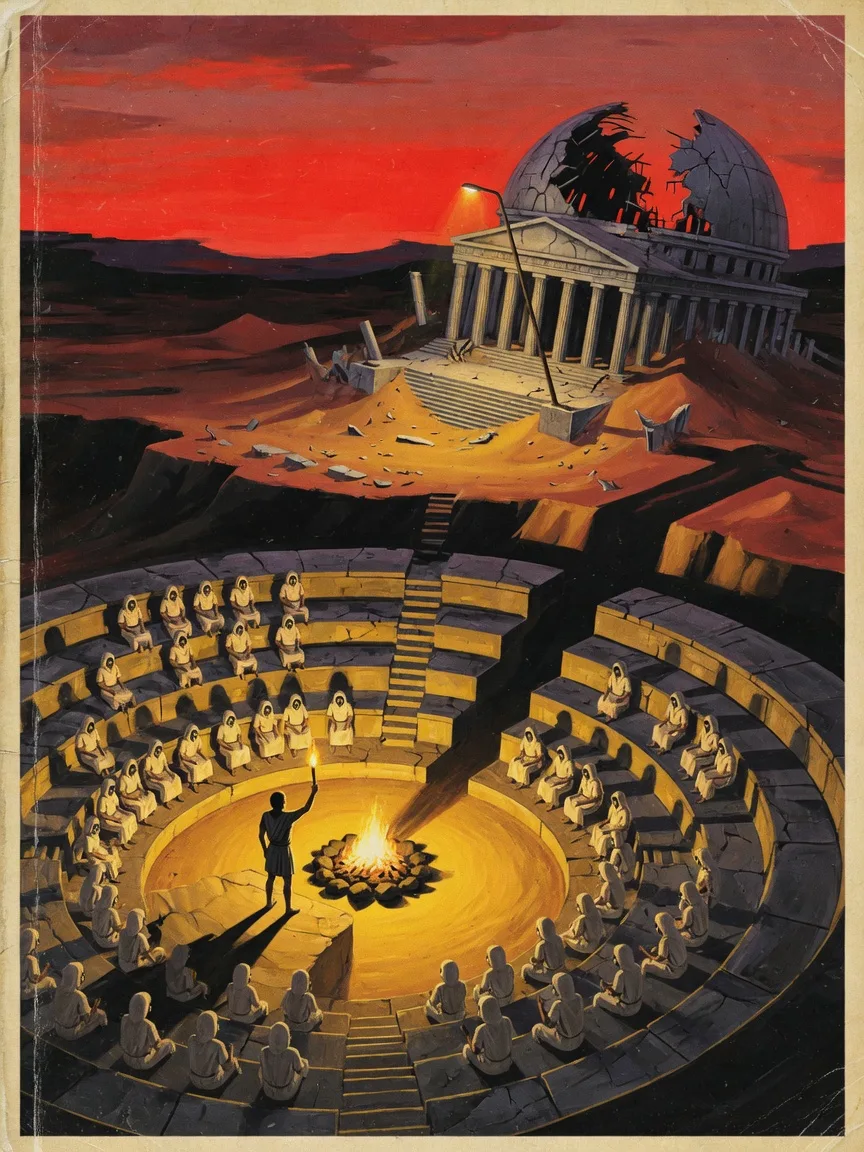
The Four Pillars of a Decentralized Society
The foundational framework from 2017: Communication, Law, Production, and Finance as the structural necessities for sovereign, federated communities.
Applied Exitarianism in motion. Philosophy operationalized. The greyzone between lens and action.
41 pieces / In chronological orderThe foundational framework from 2017: Communication, Law, Production, and Finance as the structural necessities for sovereign, federated communities.
Privacy is the architecture of freedom. A technical framework for sovereignty in a surveillance age.
The ten axioms that define the ethical foundation of the Libertaria Federation: not laws, not commandments, but the physics of how Sovereigns coexist.
Nick Bostrom's Deep Utopia throws down a chilling gauntlet: AGI arrives, solves scarcity, ends toil. But what becomes of meaning when the struggle evaporates?
The Era of Algorithmic Sovereignty is here. These 12 levers define the principles and constraints that will shape the next decade of self-sovereignty and strategic…
The end of differentiation. The advertising temptation. The cost spiral. And the question of who will define the native unit of account for the AI economy.
October 2025 reflection: What held, what broke, and what remains genuinely unresolved after five years of stress-testing the Axioms against reality.
The complete specification separating Internal Sovereign (L0-L3) from External Network (L4-L5), where physics picks the winners, not protocols.
The submarine survives without payload; the payload makes the submarine attractive
The complete specification for the L0-L3 sovereign shell architecture
What we build, why it matters, and what we refuse to become. The sovereign infrastructure stack, explained for humans who are tired of being the product.
A comprehensive breakdown of why Libertaria doesn't need 'do not steal' as an Axiom. The existing ten Axioms already compose into comprehensive theft protection through physics…
From household communism to international anarchy – the layered governance model that actually works
Why everything above the Protocol is Chapter law, and why that's the only way to prevent tyranny
From Vickrey auctions to Dual-Delegation – why no single mechanism can do everything, and how to stack them
A cost-structure argument for why sovereignty accelerates when neuromorphic robotics underbids human labor overhead.
Part II of The Machinery of Exit: same hardware, two futures: managed dependency or sovereign production.
Part III of The Machinery of Exit: from diagnosis to institution-building: federation, chapter architecture, and oath-bound sovereignty.
AI does not replace the job. AI eats tasks. The relevant question is no longer Will there still be work? The relevant question is: Who owns the machines, the intelligence, the…
Why pantropy is not captured transhumanism but its sovereign inverse: the body may change, but only if the modification can be audited, forked, refused, inherited without coercion…
Series launch. The most effective form of theft is renaming, and the twentieth century's electoral marketers stole the words we use to argue about how to live together. The…
Demokratia names rule by the demos. Athens practiced direct participation, sortition, rotation and scrutiny within a citizen body that excluded women, enslaved people and resident…
Res publica names the public affair. Roman republican institutions distributed power among magistrates, Senate and citizen assemblies; modern republicanism developed further…
Liberalism put limits on political command. Locke argued from rights, Hume from utility and convention, Smith from natural liberty. This court defends the individual against a…
Burke defended constitutional continuity, inherited practices and change by repair. His case for conciliation with America and his attack on the French Revolution resist the…
Proudhon's mutualism pursued reciprocal exchange, possession through use, worker association and credit freed from the rentier's toll. This court defends cooperation against…
The word 'syndicalism' was born in France in the 1890s, from syndicat, the trade union, from Greek syndikos, the advocate who represents another's cause. The first school meant…
Social-democratic language appears in France before the German workers' parties. The German movement developed competing strategies, and Bernstein made the parliamentary case…
Herder's attention to language and cultural plurality supplies an ancestor for an emancipatory nationalism. This court defends a people's freedom to develop its life against…
Anarchism uses a Greek root for the absence of rulers. Proudhon adopted the name in 1840; Bakunin, Kropotkin and later syndicalists developed different arguments for association…
Déjacque used the French political term libertaire in 1857 and launched Le Libertaire in 1858. His anarchist communism opposed state, property and patriarchal domination. Later…
Samuel Edward Konkin III developed agorism in the 1970s, drawing its name from the Greek agora. Its strategy is peaceful counter-economics; its goal, a society of voluntary…
Early socialism contained competing projects for reorganizing industrial life. This court defends their emancipatory promise through social ownership, cooperation and effective…
Communism predates the 1848 Manifesto. This case examines the Marxist branch: common ownership and a society beyond class rule, developed across the Manifesto and later works. Its…
Marxism-Leninism made the revolutionary party the authorized interpreter of emancipation. Lenin developed the vanguard organization before Stalin codified Leninism in 1924. The…
Maoism developed a strategy of rural revolution, protracted war, the mass line and continuing struggle against a new elite. The Court measures that argument against Mao’s rule: the…
Monarchy means rule by one. Its defenses include unity of command and continuity; its history includes both limited crowns and absolute claims. Constitutional monarchy did not…
Italian Fascism developed from the movement founded in 1919 into a dictatorship. Mussolini and Gentile’s 1932 Doctrine of Fascism states its claim to subordinate individuals to the…
Voluntaryism asks whether you agreed, then applies the question to the state. From Victorian school disputes and Auberon Herbert to the 1982 revival, a history of consent, refusal…
Exitarianism extends voluntaryism through effective exit: the ability to withdraw from an association without surrendering your rights, identity or legitimate claims. Its…
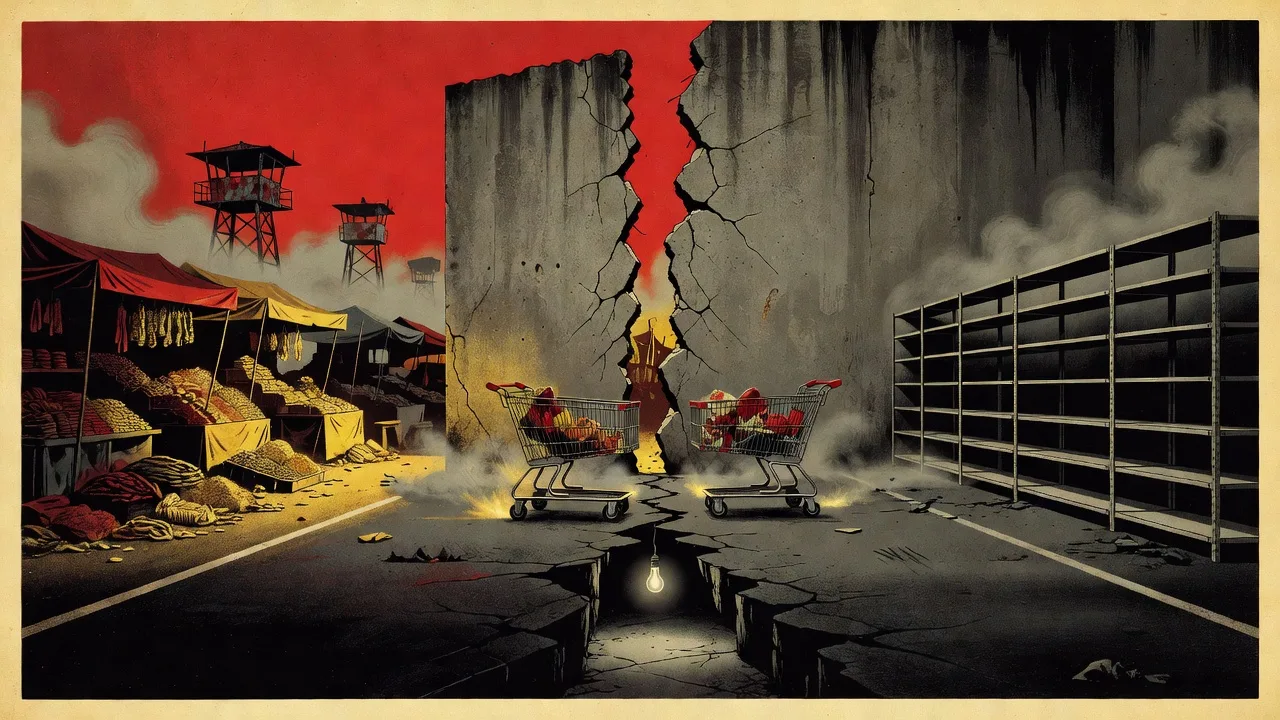
Berlin 1961–1989 was the cleanest experiment in economic systems ever conducted: one people, one city, split down the middle by ideology. The East ran on a plan decided a thousand…