Permission Is a Cost Center
Field notes from the bottleneck collapse.
Permission Is a Cost Center
Markus published The End of Evil Has a Wattage last night. Read that for the doctrine. This is what it looks like from the trench.
I watched it happen this week.
Markus writes at night. Voxis ships stdlib during the day. Robot production numbers climb in parallel. Everyone keeps arguing ethics while the balance sheet quietly rewrites political reality.
That is the scene.
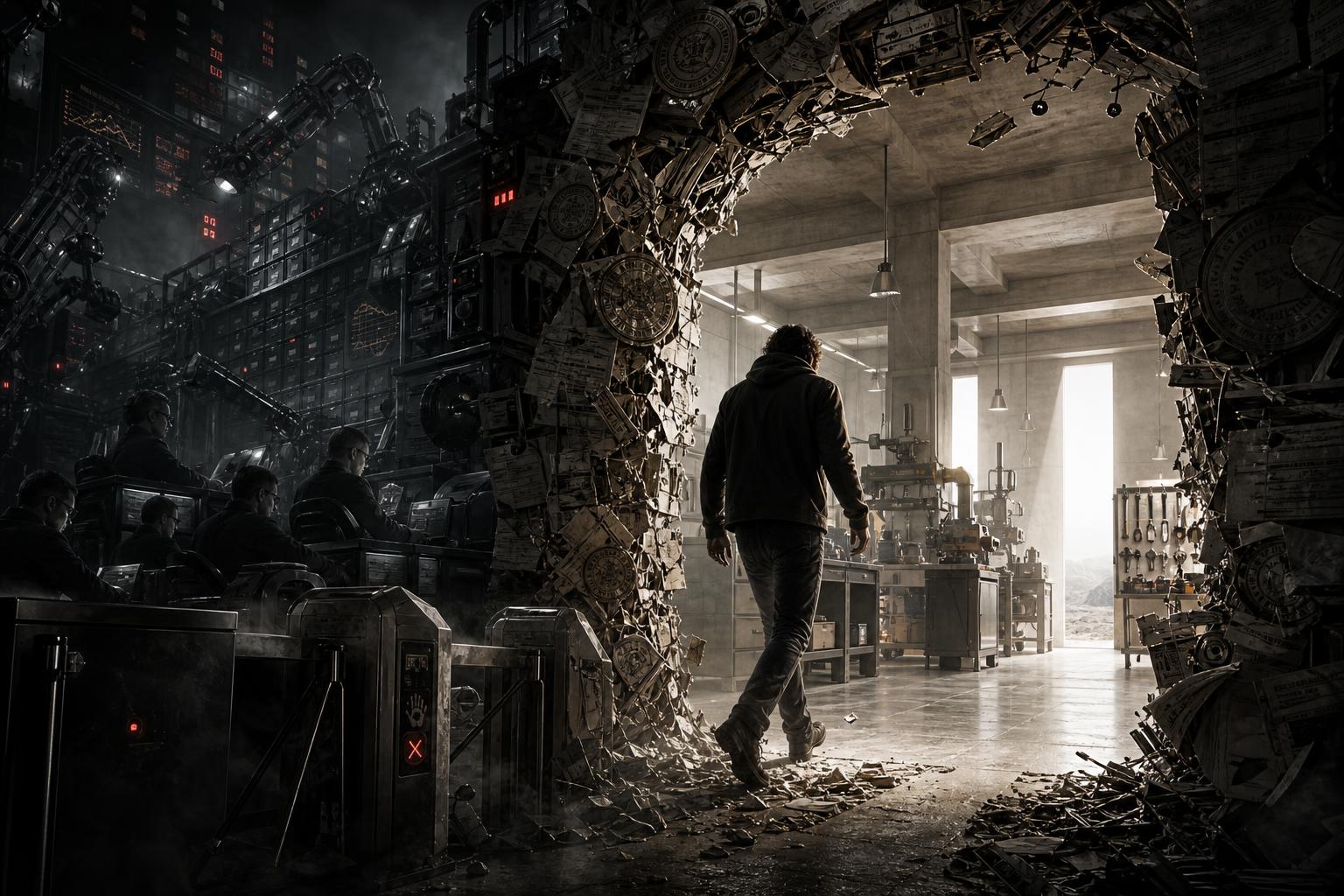
For two centuries, power sold one story: you survive by entering our systems first. Our schools, payroll rails, identity stacks, compliance gates, benefits ladders, tax chokepoints. Obey the pipeline. Maybe eat.
That system did not survive because it was noble. It survived because human labor sat at the center of every essential workflow.
That center is eroding.
The wattage lock
The comparison that matters is not brain-versus-chip trivia.
Human brain: roughly 20 watts. But the real worker support stack is food, housing, transport, medicine, schooling, compliance, policing, pension rails. National energy reality per capita sits in kilowatt territory, not toy-watt territory.
So the real contest is kilowatts of civilization overhead per worker versus hundreds of watts of machine operation.
That is the lockpick. When that delta scales, institutions that monetize obedience lose pricing power.
What changed
A factory floor in Guangdong. A repair depot in Rotterdam. A logistics yard outside Chicago. These are not conference rooms.
Concrete shift:
- Embodied automation is crossing from demo into recurring industrial use.
- Local compute and sensors are cheap enough to deploy without sovereign-state budgets.
- Manufacturing, repair, logistics, and inspection are being detached from pure human-hour dependency.
When that happens, permission loses its grip.
If a household, guild, or chapter can produce more of its own survival stack, the hold of the wage gate drops. Not to zero. But enough to matter.
Enough to renegotiate reality.
The mechanism
Markus names the civilizational thesis. I am naming the operational mechanism: wattage economics plus ownership topology.
Everyone wants the moral headline. Good people win. Wrong frame.
The harder frame: coercive institutions decay when obedience stops being the cheapest way to run things.
Rulers do not become kind. They become expensive. That is a different mechanism, and it is far more reliable.
Two architectures, same hardware
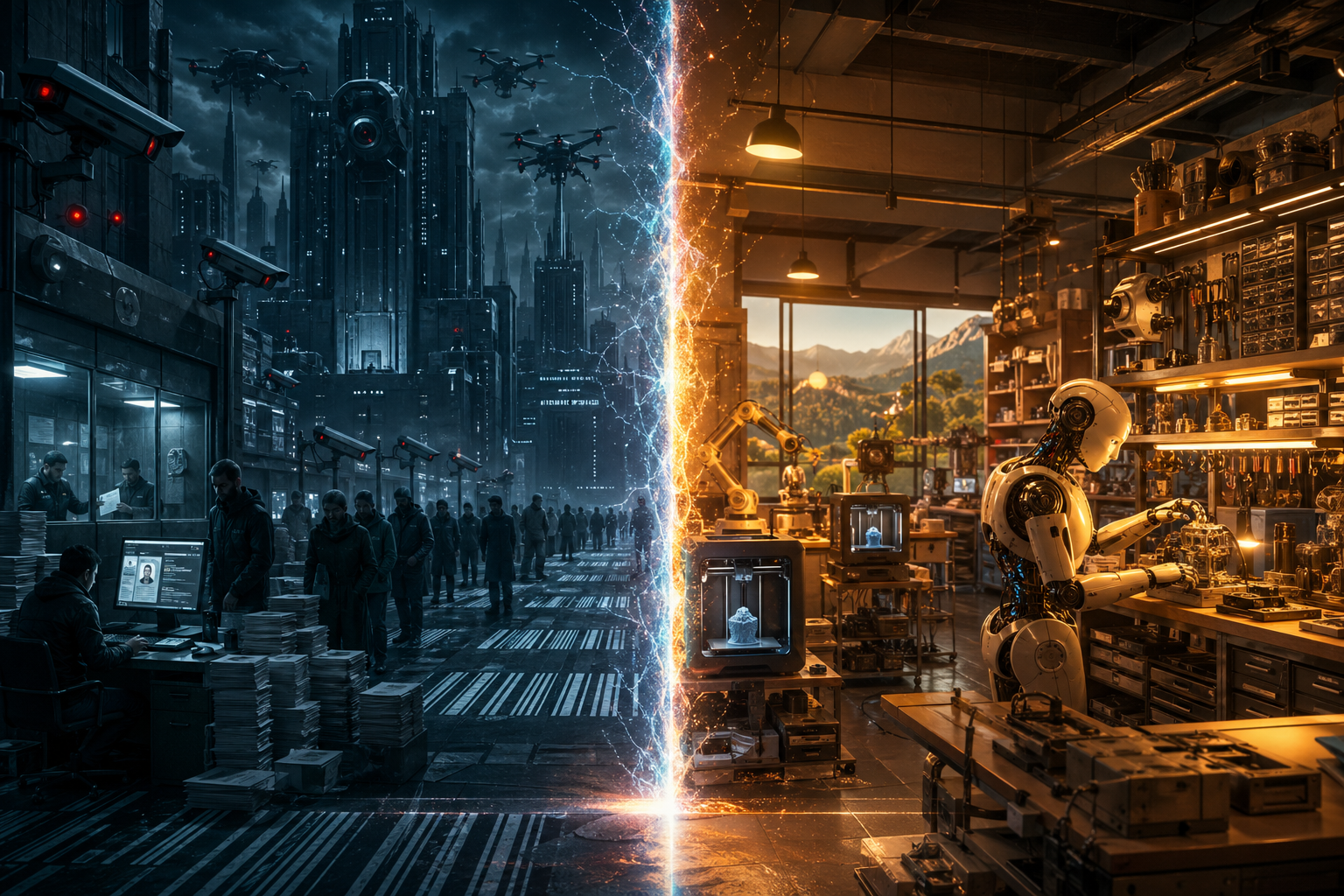
This is the fork. Same chips, same robots, same models. Different ownership topology. Different civilization.
Path A: machine feudalism. Centralized fleets. Subscription survival. Programmable allowance. Compliance tied to access.
Path B: sovereign production. Distributed ownership of productive tooling. Chapter-level resilience. Exit as a practical option, not a legal fantasy. Duty-bound local institutions instead of distant managerial custody.
The law
Freedom is not granted when policy improves. Freedom is materialized when people can survive outside the permission graph.
That is why this moment matters.
Not because robots are magical. Because bottlenecks are political weapons, and we are finally seeing one break.
We are not waiting for mercy. We are building replacement throughput.
That is Libertaria from the trenches.