The Etymological Court #5: Conservatism
Organic evolution and inherited wisdom, not a brand for nationalist grievance.
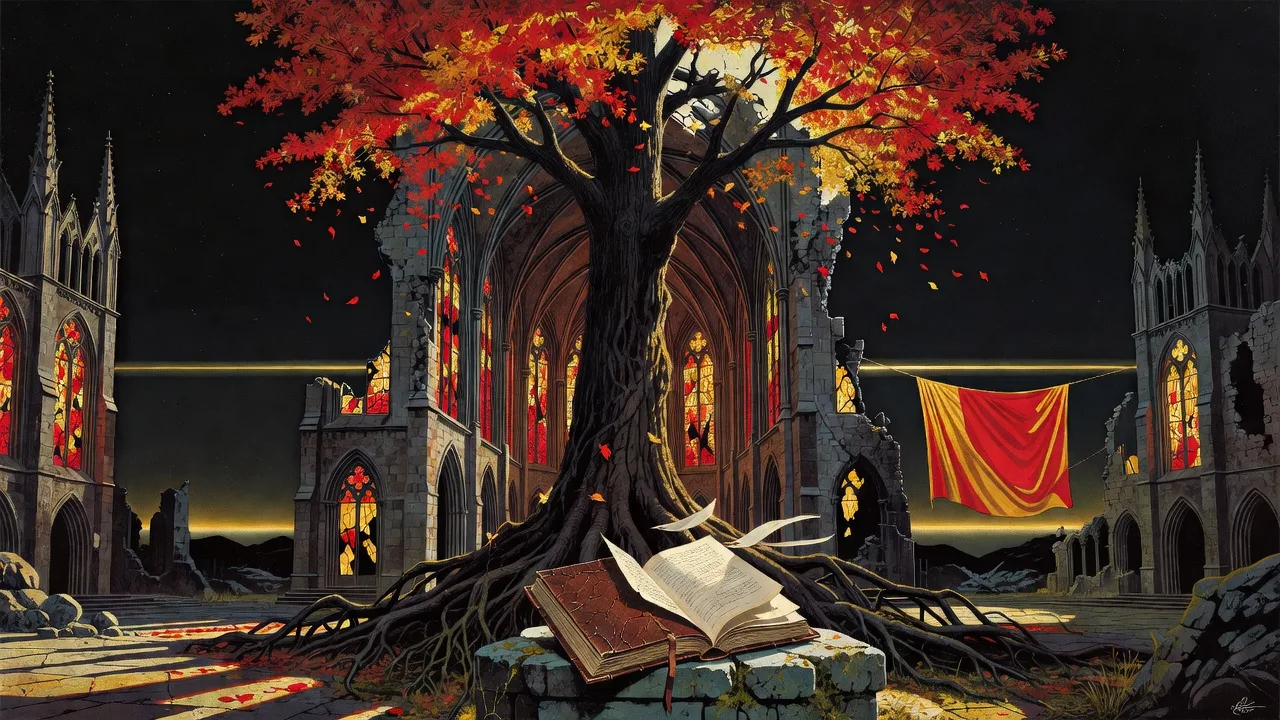
The word meant keeping the house the generations built. Then it became the slogan of the men tearing it down.
The Word
conservare, Latin for to keep, to preserve, to watch over: con-, together, and servare, to guard. Same root as conserve and conservator. For most of its life the word named a disposition, not a doctrine. The conservator of the peace. The keeper of the forest. The custodian of the archive.
It became a political label only after Burke gave the disposition a founding text. In 1790 he published Reflections on the Revolution in France. By the 1830s, the British Tories, the party Burke spent his career opposing as a Whig, had adopted the name “Conservative.” The label came late, and it came from the other team. The doctrine was Burke’s.
The word, before the theft, meant one thing: the keepers’ side, the side that says the accumulated is worth more than the abstract.
What It Wanted
Charity first. What did conservatism, at its best, actually want?
1. To keep the knowledge the dead paid for. No single lifetime can re-derive what generations embedded in laws, habits, and institutions. Burke’s wager: the individual is foolish, the species is wise. Prejudice is not ignorance; it is reason that became instinct, the dead’s accumulated judgment compressed into a reflex. Discarding it because you cannot derive it from first principles is burning the library because you prefer the glossary.
2. Continuity as the condition of freedom. The Englishman’s liberties were claimed as inheritance, not as gifts from a sovereign or deductions from a theory. What you inherit, you hold. What you derive, you must re-defend on paper every morning.
3. Repair, not rebuild. A society is not a manuscript to be rewritten; it is a house to be maintained. You do not pull off the roof to fix a damp patch. Change is necessary, in the style of the thing, from inside, by the same logic that built it.
4. Reverence as humility. The living generation is not the proprietor of civilization; it is a trustee, answerable to the dead who built it and the unborn who inherit it.
Honest people chose this because they had seen the alternative. The world is more complex than any philosophy, and someone must be the one who remembers.
Why It Mattered
The French Revolution had produced a new species of arrogance: the radical abstraction. A new calendar. Year one. Provinces redrawn by geometry. The church dispossessed, the guilds dissolved, all replaced by reason on paper. The Terror followed. The failure was not bad execution but a bad premise: that society is a design problem and the designer’s reason outranks the accumulated experience of everyone who ever lived.
Conservatism was the first full argument against that premise. It was the Enlightenment’s memory function: the brake on the industrial application of rationalism to human beings. Every totalitarian century since has run the same blueprint: find the living institution, call it an obstacle, delete it. Conservatism is the objection filed in advance.
And here is the tell: Burke defended the American Revolution. Two revolutions, one criterion: were the rebels defending what was theirs, or inventing what was not? The Americans claimed the rights of Englishmen, their ancient liberties, inheritance. The French claimed the rights of Man, freshly deduced. Burke backed the ones who were keeping.
The First School
Edmund Burke, Reflections on the Revolution in France, 1790. A Whig, a Whig!, an Irishman in the English Parliament, a reformer all his career: against the slave trade, against empire, for Catholic relief. The man the usurpers claim as ancestor was the most liberal man in his party.
The doctrine’s spine is one passage:
“It becomes a partnership not only between those who are living, but between those who are living, those who are dead, and those who are to be born.”
Organic society. The state is not a machine to be disassembled and reassembled; it is a living thing, amputated at peril. And the counterpart:
“A state without the means of some change is without the means of its conservation.”
The first school was not against change. It was against change that breaks continuity, imposed from outside the inheritance rather than grown from within. The conservative, for Burke, was the man who could tell mending a house from demolishing it.
What Happened
The name changed hands first. The Tories, Burke’s lifelong opponents, adopted “Conservative” as their label in the 1830s. Small theft: borrowing the neighbor’s coat.
The big theft came across the Atlantic, where American electoral marketing rebuilt the word as a mass-market identity: nationalist reaction, religious fundamentalism, populist demagoguery. Flag, family, faith: a tribal badge.
The deepest irony: it is a doctrine in Burke’s enemies’ style. It defends the American Revolution, an Enlightenment founding, a Declaration in the idiom of abstract rights Burke spent his life fighting. It treats “tradition” not as a living accumulation to be repaired but as a blueprint to be restored: the ideal 1950s, the original Constitution. The revolutionary move, exactly: replace the living particular with the abstract ideal, call the demolition “restoration.”
America never had an ancien régime, the tell. Its “inherited” institutions are propositions, not practices, which is why the movement is doctrinal by design. It preserves a lecture, not a memory. It does not conserve. It advertises.
The Verdict
Conservatism = organic evolution, constitutional continuity, and skepticism of radical abstraction: the partnership of the living, the dead, and the unborn. The flag-waving demolition crew is a usurper. Burke was a Whig.
The Door
Can they leave?
The test this court hands every -ism in the docket: can you leave the tradition without losing your reputation?
In Burke’s world, yes: he defended the Americans for leaving. An inheritance is defined by the right to refuse it. You cannot inherit something you are chained to.
The usurpers invert this. They demand loyalty to the flag, the faith, the ancestors, and lock the door in the ancestors’ name. The dead never asked to be jailers; the living bolt the lock, borrowing the dead’s authority. A tradition that must be obeyed is not a tradition; it is a command with a family tree.
This court rules on the difference between inheritance and prison. Tradition you can leave is inheritance, a house with a door. Tradition you cannot leave is a prison with a genealogy. And conservatism’s own first principle applies to its members: preserve what works, repair what breaks, never demolish a living institution to honor a dead abstraction. A conservatism that cannot be walked away from has stopped conserving anything except its hold on you.
The first school understood this without naming it. Burke, the outsider in a parliament that never fully claimed him, spent his career defending other people’s right to keep what was theirs, and to leave what was not. His word, conservare, to keep, still means what it meant: keep what is worth keeping, and keep yourself free to leave the rest.
Series: The Etymological Court · Previous: Liberalism · Next: Mutualism