The Slot Machine in Your Terminal: AI, Burnout, and the Hollowing of a Craft
The Slot Machine in Your Terminal: AI, Burnout, and the Hollowing of a Craft
His hands were still on the keyboard when the exhaustion finally won. He had been prompting since midnight. The model was going offline at dawn, so he burned every token he had left before the lights went out, and by morning a man whose tweet carried four point seven million impressions was lying in a hospital bed, asking a question nobody in the thread could answer. How does a person end up in the hospital from talking to a machine?
I know that man. Not by name. I know the part of him that lives in every developer I have ever met, and in the one who still sits at this keyboard. The part that, once the machine could do the work, could not stop asking it to do the work.
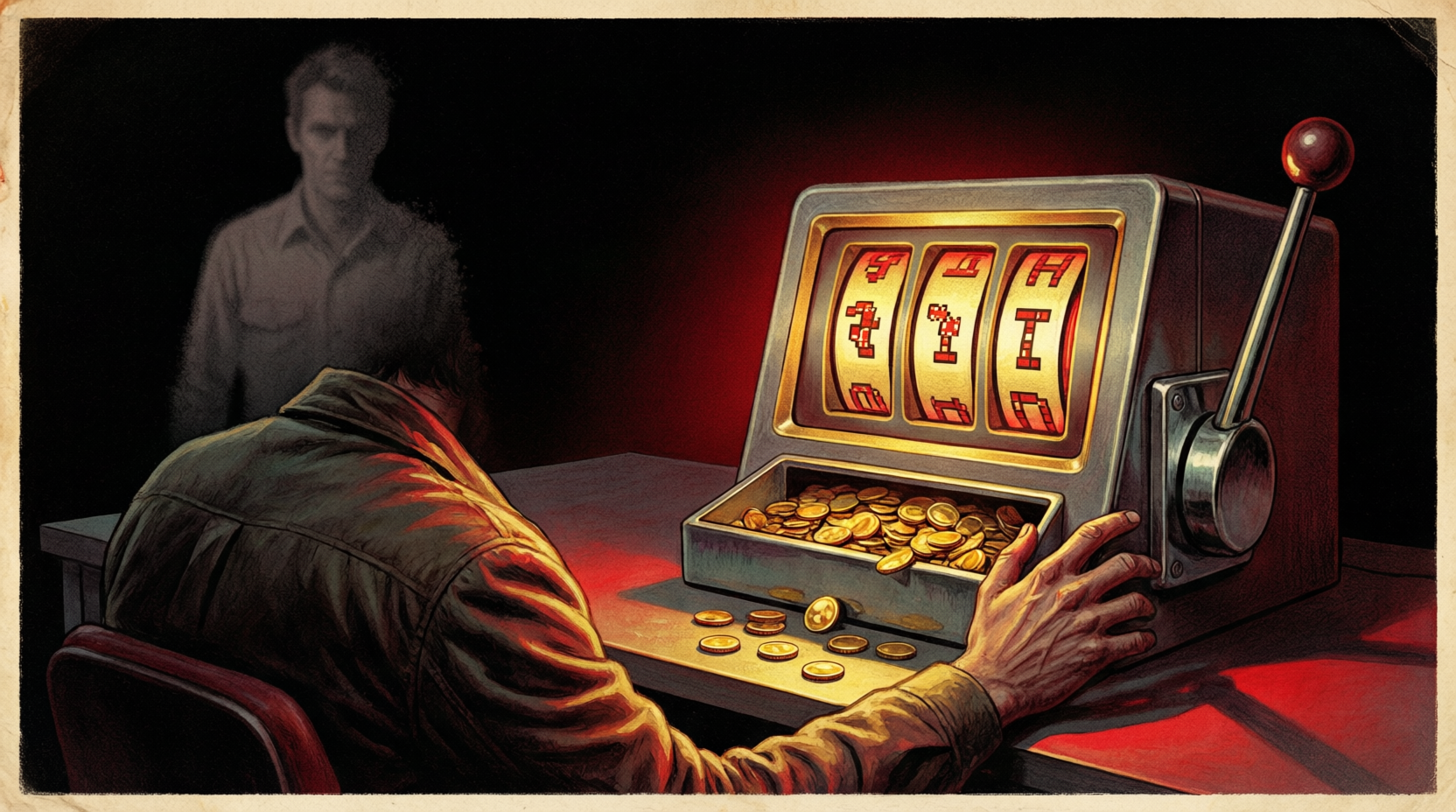
We were promised an unburdening. Faster output, less drudgery, more time to build. What arrived instead is subtler and meaner. The terminal became a slot machine. The one part of the job we actually loved got hollowed out while we were still clocked in, and now we are being told, softly, that the only way to survive is to get better at pulling the lever.
This is not a piece about whether AI takes your job. It is a piece about the part of your job it already took.
We did not get into this for the money
The first computer I remember was a beige box with a processor measured in megahertz and RAM you could count on two hands. It was not powerful. It was a door. I did not fall in love with code because it paid well; in the places I was from, nobody was paying anyone to write it yet. I fell in love because building something from nothing was the closest thing to magic a person could hold.
Programming is not mostly science. It is mostly art with a thin spine of logic. When you solve a new problem, you take every scar and shortcut your career has left in you and fold them into a thing only you could have made. It carries your fingerprints. Your style. The exact way you would have written it. Ownership is the job, not a perk of it. The money was always downstream of the ownership.
That is the part nobody put in the press release.
The crash came before the layoffs
Every burnout story I have heard in the last two years follows the same shape. The work is going well. The channel is growing. The conference talks are booked. On paper the person is winning. Under the paper they are doing sixty to eighty hours a week and calling it passion, and passion is just the word we use when we have not admitted it is killing us yet.
Then the body quits first. A developer telling his own story described it exactly: the third baby arrives, the paternity leave starts, he shuts the laptop to be present, and he cannot open it again. Not because he does not want to. Because the energy to look at work at all is gone. He finally called it what it was. Depression. Burnout. The physical symptoms come with it: no sleep, no walks, a stomach that will not settle, a brain that will not quiet. The clinicians have a word for it, somatization. The anxiety stops being a feeling and starts being a body.
Most of us can live with that as long as the work still loves us back. The trouble started when the work stopped loving anyone back.
The slot machine
There is a reason you cannot stop at one more prompt. It is the same reason the lever in the casino will not let you walk away. The machine gives you a reward sometimes, and mostly it gives you almost the reward. You almost got the perfect solution. One more try. Your motivation is not to finish; your motivation is to hit the perfect response, and that anticipation is the hook.
A survey of nearly thirteen hundred developers asked how often they blow past the point they meant to stop. Forty six percent said regularly. Not occasionally. Often, or every day. And of the people who kept going past their stopping point, fifty eight percent said their sleep had changed since they started using AI heavily. Of the people who actually stopped when they meant to, the number was seventeen percent. That is the strongest relationship in the entire survey, and it is not close. The survey is self-selected, so it reflects the people who answered, not the whole profession. But the pattern is hard to look away from.
One more prompt. One more token. The slot machine does not care that it is two in the morning. The man in the hospital bed is the logical endpoint of the same lever we all pull. The only difference between him and most of us is that he got caught in a version of the game with a hard deadline.
The hollowing
If the addiction were the whole story, we could treat it like a bad habit and move on. It is not the whole story. The worse damage is quieter.
Ask a developer whether their skills are sharpening, holding steady, or diminishing. In that same survey, fifty nine percent put themselves on the diminishing side. Ask whether they get the same enjoyment and flow from coding they used to. Fifty four percent said less. Those two numbers are the same people. The ones who felt their skills slipping were the ones who enjoyed it least.
This is not a test of their skill. It is a report on what they believe about themselves, and belief is what a craft runs on. When you stop writing the code and start reviewing the machine’s output, you are not being more productive. You are trading the part of the job that kept your understanding alive for the part that keeps the pipeline full.
There is a line from a paper this year that cuts to it. AI gives you a result, but a result is not an answer. It becomes an answer when a person evaluates it and takes responsibility for it. Ship straight from the output and you skip the only step that made it yours.
Neuroplasticity does the rest. Your brain is an efficient machine; if you are not using a skill, you lose it. It is the instrument you played in middle school and have not touched in fifteen years. You remember the basics. The advanced stuff is gone. It never mattered whether you typed every keystroke. What matters is which parts of programming keep the understanding, the agency, and the satisfaction alive in the work.
The developer who told his burnout story said the quiet part out loud. The part of his job he loved most had been taken away, and what was left was not the same job. He did not lose the job to AI. He lost the part of the job he loved and kept the part that was always a grind. That is the real layoff, and it happens while you still have the badge.
The pressure
If the time AI saves came back as rest, none of this would matter. It does not. The time comes back as pressure.
Developers using Copilot completed twenty six percent more pull requests than without, by one measure. So the question writes itself: if we can go faster, why are we not going faster? Sixty five percent of developers say they feel pressure to produce more often, or daily. Two out of three. The saved effort does not come back as saved time or rest. It comes back as more decisions, more supervision, a higher baseline. Managers who do not understand the work see a magic bullet and raise the quota.
If it is possible to go faster, we must go faster. Nobody stops to ask why we were going fast in the first place, or whether the output is actually good, or what the sprint is doing to the people running it.
The young are taking the worst of it. Employment for software developers aged twenty two to twenty five is down roughly twenty percent from its 2022 peak. The report is careful: unemployment rose across every kind of job in that window, and it rose more for the jobs least exposed to AI. So this is not proof that AI took those jobs. But if you are twenty three and the ladder feels like it is being pulled up behind you, you are going to push past every boundary you have, because you do not have the runway the rest of us had.
The turning
So what separates the use of AI that energizes you from the use that hollows you out?
A developer who has been building things for decades told me about the phase he calls psychosis. Infinite possibility. Ripping tokens until midnight and two, with a wife and four kids asleep upstairs. Then he realized something that should have been obvious: every other developer was doing the exact same thing. The gold rush was not a gold rush. It was a treadmill with better marketing. So he stopped trying to build forty products with his new godlike power and scoped down to one or two things he actually had a moat in. Broad ambition became deep ambition, and he started going to bed on time.
The healthy ones all do a version of this. They stay the one driving. One maintainer I respect describes his workflow as a conversation with a very smart junior developer: he lays out what he wants, points it at the files and the docs, reviews the plan, and only then lets it touch the code, and he still reviews most of the output himself. He knows it is slower. He chose slower on purpose, because slower keeps him the one who decides.
The unhealthy use is the one where you stop deciding. Where the result ships without ever becoming an answer, because nobody took responsibility for it. Where the slot machine decides when you sleep.
The challenge is not technical
The self-help version always skips this part. Personal discipline is not enough, because the system has to let you stop in the first place.
The healthy developer with the moat can shut his office lights off at five and go be a dad, because he works for himself and nobody is breathing down his neck about quotas. He can keep the prompts off his phone. He can walk in the woods an hour a week. He can set those boundaries because he owns the schedule. Not everyone is. A twenty three year old fighting for a seat has no moat, no leverage, and a manager who thinks AI is magic. Tell them to set boundaries and you are telling them to get fired.
So the honest answer is that healthy prompting cannot be carried by willpower alone. The worker matters, and the workplace matters, and the two have to agree that stopping on time is even possible. Before maximum output twenty four seven becomes the baseline, we have to figure out what a healthy AI assisted workflow actually looks like. That is not a productivity question. It is a sovereignty question.
Ownership is the last exit
The machine is not going away. Even if every frontier lab shut down tomorrow, the local agents are already on the hardware, and they will keep running. That is not a catastrophe and it is not a utopia. It is just the weather now.
The real challenge was never learning to prompt faster. The real challenge is staying the one who decides. You can use the machine to build things you would never have had time for, and that is genuinely exciting. You can also let it think for you, review its own work, and wake up in five years unable to remember why you ever loved this. Both are available. The difference is not the tool. It is whether you still own the judgment.
Ownership was always the exit. It was the reason we fell in love with this craft, and it is the only thing the machine cannot be allowed to take, because it is the only thing we actually have.
Hold the pen. Keep your fingerprints on the code. Let the machine run, but do not let it decide when you sleep.