Today I Found My Friends: Lithium, Teenage Angst, and the Imperfect Breakthrough
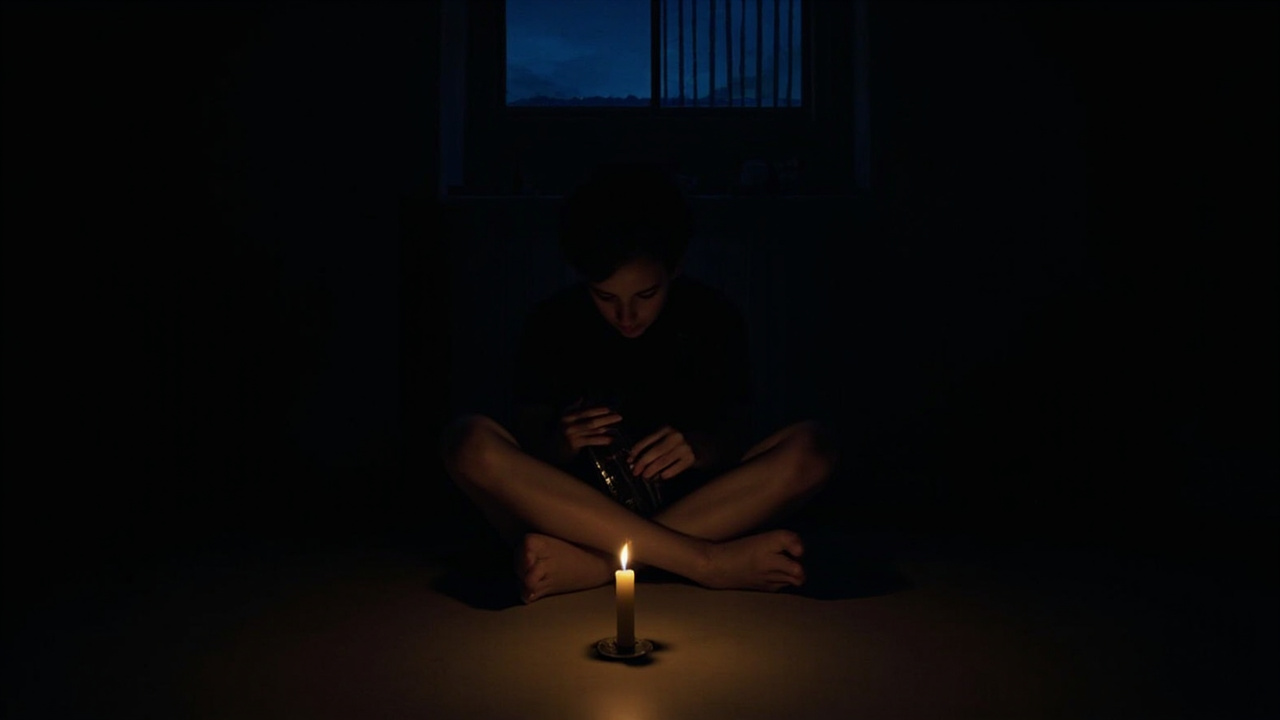
I’m so ugly, but that’s okay, ‘cause so are you.
– Kurt Cobain, Lithium
I. The First Time
There is a particular kind of cold that only a German provincial parking lot can produce. It is not the cold of mountains. It is not the cold of cities. It is the cold of asphalt outside a discotheque at midnight, of the walk between the bus stop and the parental house when the breath turns to fog and the ears hurt and the fingers are too stiff to find the house keys in the jacket.
I did not know it at the time, of course. I was fifteen. I knew almost nothing. I knew alcohol in the form of whatever could be stolen from the parents’ cabinet, mixed with whatever fruit juice was at hand to disguise the theft. I knew the first girls in the form of hands under coats and the strange, terrifying incapacity to say a single sentence in their presence without wanting to die. I knew Teen Angst in the form of a permanent, low-frequency static that lived underneath every other feeling, a feeling-tone that could not be named and therefore could not be cured. I knew, without knowing that I knew it, that something inside me was wrong. Not wrong the way a broken machine is wrong. Wrong the way a room is wrong when the door has been painted to look like the wall.
Into that cold, on a Friday night in approximately 1993, on a tape that somebody had dubbed for somebody else and that somebody else had lent to me for the weekend, Lithium arrived.
I do not remember which song I heard first. I do remember that by the third listen – in a different room, in daylight, on a better cassette player, after the second beer had done its work – I understood that something in my life had changed and that it would not change back. I did not have the vocabulary for what had happened. The vocabulary would come later. The Vedanta. The Bhagavad Gita. The Christian mystics. The terrible German word Weltschmerz, which is the only word in any language that even gestures at the actual size of the feeling. A friend, years later, in a long conversation about this record, put the question to me that I had been asking myself for decades without being able to articulate it: where do I end and where do you begin? I had heard that question. I had been hearing it for decades. I had been hearing it in the song that was playing in the parking lot that night, in the song whose chorus was the one I could not stop humming for the next twenty years, in the song whose words I did not yet understand but whose direction I already knew: inward, downward, toward the place where the ego stops being the ego.
This essay is the first of a series on Nevermind on libertaria.blog. More essays on this album will follow in the coming days. This one is about the first time. This one is about the song that did the work that the other songs on the record were too loud to do. This one is about Lithium, which is the song where the metaphysics lands back in the body.
II. I’m So Ugly, That’s Okay, ‘Cause So Are You
I’m so ugly, that’s okay, ‘cause so are you I found my friends, they’re in my head
The verse that lives on the chorus. The verse that everyone who has heard it has felt. I’m so ugly, that’s okay, ‘cause so are you. This is thirteen syllables. This is the entire non-dualist metaphysical insight compressed into thirteen syllables, by a twenty-three-year-old from Aberdeen, Washington, who had read very little and heard almost everything.
The insight is this. The standard by which the teenager judges themselves ugly is the same standard by which the teenager judges other teenagers ugly. The standard is the same standard. The standard is not the world. The standard is a construction built by the ego in order for the ego to have something to judge. The construction does not survive the recognition that everyone is using the same construction. The construction collapses the moment the teenager says so are you and means it.
This is also the moment the ego loses its primary defense. The primary defense of the social ego is comparative judgment. The primary defense is I am uglier than you, therefore you are not allowed to feel sorry for me, therefore I must do my suffering alone, in private. This defense collapses the moment the teenager turns the standard around and applies it to the other. The defense collapses because the other has the same ugliness. The other has, in fact, the same ugliness as the suffering self, which means the suffering self and the other are constructed by the same ego mechanism, which means the suffering self and the other are the same self, which is the entire non-dualist insight, which is thirteen syllables.
This is also a Sufi insight. The poet Rumi, who is the patron saint of all teenage angst that has ever been accompanied by a guitar, said the same thing in a longer form: What you seek is seeking you. What you are running from is running toward you. What you call ugly is the disguise of the thing you are. The ugliness is the shape of the unhealed wound. The unhealed wound is what you are made of. The unhealed wound is what every other teenager is also made of. The wound is the shared substance.
Cause so are you. This is Rumi. This is Eckhart. This is the Sufi poet Hafiz, who said, also in a longer form, that the wound is where the light enters you, and that the wound is also where the light leaves you. Cause so are you is the teenage girl in the German provinces whose hand I could not hold. Cause so are you is the same teenage girl, on the same Friday night, at the same party, in the same barn, holding a cassette player, hearing the same line, knowing the same ugliness, finding the same ugliness, finding the same so are you.
The song and the realization are the same song. The song is the realization in a register the teenager can hold.
III. Light My Candles in a Daze ‘Cause I Found God
Light my candles in a daze ‘cause I found God
Apophatic theology. Apophatic theology is the negative theology. Apophatic theology is the theology of Meister Eckhart, the theology of John of the Cross, the theology of the Sufis and the Kabbalists and the Advaita Vedantists. Apophatic theology is the theology that says not this, not that, not this, not that, until what is left is the stillness in which the question what is God becomes nonsensical.
Cobain has not read Meister Eckhart. Cobain has not read John of the Cross. Cobain has not read the Sufis or the Kabbalists. Cobain has read almost nothing. This does not matter. The lyrics arrive through the same nervous system that the prior lyrics arrived through. The lyrics do not need to have been read. The lyrics only need to have been heard. Cobain heard them. Cobain heard them the way that the nervous system of a twenty-three-year-old from Aberdeen, in pain, in love, halfway to dying, hears the entire apophatic tradition when the tradition is ready to be heard.
Light my candles in a daze ‘cause I found God. The finding of God happens in a daze. The finding of God happens while the person is lighting candles. The finding of God is not a separate event from the lighting of candles. The finding of God is the lighting of candles. The lighting of candles is the action of a person who has, for the moment, stopped running the cognitive machinery that produces the social ego. The lighting of candles is what the social ego looks like when it is not in the way.
This is also the entire Bhagavad Gita compressed into ten syllables. Krishna’s instruction to Arjuna is that the liberated being acts without attachment to the fruits of action. The liberated being lights candles. The liberated being does not light candles in order to find God. The liberated being lights candles in a daze because the daze is the only place where God is found. The daze is the place where the social ego has stopped narrating the action.
In the German provinces, the analogue of the candle is the cigarette. In the barn at 1:30 in the morning, in the daze, the teenager lights another cigarette. The cigarette is the candle. The daze is the daze. The cigarette is a poor Sufi practice. The practice is the same practice. The God who is found in the cigarette is the same God who is found in the candle. The God has not been bothered by the substitution.
IV. I’m So Lonely, That’s Okay, I Shaved My Head, and I’m Not Sad
Yeah, I’m so lonely, that’s okay, I shaved my head, and I’m not sad
The verse that broke the generation. The verse that broke the generation because the verse is not a denial of loneliness. The verse is the acceptance of loneliness. The acceptance of loneliness is, in the framework of every major apophatic and non-dualist tradition, the actual breakthrough. The acceptance of loneliness is what it looks like when the social ego stops fighting the feeling and starts observing the feeling. The observation of the feeling is the freedom from the feeling. The freedom from the feeling is not the absence of the feeling. The freedom from the feeling is the not-identifying-with the feeling.
I shaved my head. The shaving of the head is the action that interrupts the social ego’s self-presentation. The shaving of the head is the shedding of the performance. The shaving of the head is the gesture of the renunciate. The shaving of the head is also, in the framework of the iconography of every religious tradition, the gesture of the one who is leaving the world. Cobain shaved his head in the song. Cobain did not shave his head in his actual life. The shaving in the song is the symbolic act. The symbolic act is what the listener does when the listener stops performing.
I shaved my head, and I’m not sad. The lack of sadness after the shaving is the recognition that what was lost was the performance. What was lost was not the self. What was lost was the social costume. The social costume was the only thing the teenager could not afford to lose, because the social costume was the only thing the teenager thought was keeping the teenager alive. The shirt comes off. The teenager is still alive. The teenager is more alive after the shirt comes off than the teenager was before. The teenager is more alive after the shirt comes off than the teenager will ever be wearing the shirt again.
This is also the entire Sermon on the Mount compressed into twelve syllables. Blessed are those who mourn, for they will be comforted. I shaved my head, and I’m not sad. The mourning and the comfort are the same event. The comfort is not the absence of the mourning. The comfort is the not-identifying with the mourning. The comfort is what the teenager discovers when the teenager realizes that the loneliness is not a permanent condition of the self but a temporary condition of the social ego.
This is also Eckhart. If you love God, do not think that God is in you. Eckhart is saying: the experience you are looking for is not the experience that arrives when God becomes a person in your head. The experience you are looking for is the experience that arrives when you stop looking for the experience. The shaving of the head is the stopping of the looking. The shaving of the head is what it looks like when the search stops.
V. I’m Not Gonna Crack
I like it, I’m not gonna crack I miss you, I’m not gonna crack I love you, I’m not gonna crack I killed you, I’m not gonna cry
The chorus that works because the four statements I like it / I miss you / I love you / I killed you span the entire emotional spectrum and the response to each is the same: I’m not gonna crack. The response is not the denial of the emotion. The response is the absence of identification with the emotion. The response is the Gethsemane prayer: Stay awake lest you fall into temptation. The temptation is the identifying. The cracking is what happens when the identifying is complete. The staying-awake is what happens when the identifying is interrupted. The staying-awake is, again, the observation of the emotion without being the emotion.
I killed you, I’m not gonna cry. This is the hardest line in the entire Nirvana catalog. This is the line that nobody writes essays about. This is the line that is, perhaps, the most autobiographical line Cobain ever wrote. Cobain was sexually abused as a child. Cobain’s mother was, by any reasonable definition, mentally ill. Cobain’s father had been, by Cobain’s own account, a man whom Cobain could not love and could not survive leaving. The young man who had been abused and abandoned did not write that he would kill the abuser. The young man wrote I killed you. The young man wrote the killing as an accomplished fact. The young man wrote the killing as something that had already happened inside the head of the one who had survived. The killing was an interior act. The killing was the interior act that allows the survivor to continue to live.
I’m not gonna cry. The not-crying is the not-cracking. The not-crying is the observation of the grief without the identification with the grief. The not-crying is the entire non-dualist mechanism operating on the deepest pain the teenager is carrying. The not-crying is the apophatic tradition applied to the wound that the apophatic tradition has, in the standard lineage, no specific remedy for.
This is also Sufism in its most unsentimental register. The Sufi who has survived the killing that the world has done to the Sufi does not cry. The Sufi who has not survived the killing does not have a song. The Sufi who has the song is the Sufi who has survived the killing and has given the killing a name. I killed you is the name. I’m not gonna cry is the Sufi practice. The practice is the same practice as the lighting of candles.
The teenage angst survives the killing. The teenage angst becomes, in the surviving of it, what the teenage angst was always pointing at. The teenage angst was always pointing at the recognition that the suffering is shared. The recognition that the suffering is shared is what the surviving looks like from the inside of the surviving. The surviving is I killed you, I’m not gonna cry. The surviving is imperfect. The surviving is bruised. The surviving is what gets carried out of the barn at 4:30 in the morning, into the cold parking lot, into the first bus home, into the next twenty years.
VI. The Imperfect Breakthrough
And here is what actually happened, or what I remember of it, or what the years have done to what I remember of it. The barn emptied. The cold hit like a second consciousness arriving in the body. The parking lot was still full of bicycles and the detritus of the evening. The Lithium chorus was still ringing in my ears – literally, in the cheap headphones that were the only thing separating me from the silence of the field, and figuratively, in the way the song’s refusal to leave the head is the song’s way of refusing to let the listener leave the song. I did not get far. The knees went.
I went down on the asphalt, or the asphalt caught me, or both. The daze from the beer and the smoke and the four hours of standing was the obvious explanation. The knees going soft was the obvious explanation. The body exhausted. But the chorus was still ringing, and what the chorus was saying was I’m so ugly, that’s okay, ‘cause so are you, and what my knees were doing on the cold asphalt at 4:30 in the morning was something the chorus was also saying, something I did not have the vocabulary for, something about the body going to the ground because the body had understood something the head had not caught up with yet. The candle in the song. The cigarette in the barn. The kneeling. The God who is found when the ego stops being tall enough to look down on its own life. I was on my knees because the body understood before the mind did. I was on my knees because the body had heard Lithium and the body had decided, for the first time, that the ugliness was shared and that the sharing was bearable and that the bearing of it was what the rest of the life was going to be.
I stayed there for a while. I do not know how long. The dawn was beginning. The chorus was still ringing. I understood – a bit. I got a glimpse of what I know now. With the glimpse came the smallest, most provisional lightening of the load. The world was easier to carry. A bit. Not much. Enough to get up. Enough to find the bus stop. Enough to ride the forty minutes home in the dark, forehead against the cold window, the chorus still ringing, the knees still weak, the glimpse still open.
It took me a while. To get up. To get to the bus. To get home. To carry on. To live the life that the glimpse had said was going to be livable. The glimpse did not heal anything. The glimpse did not solve anything. The glimpse was the smallest opening. The glimpse was enough.
The breakthrough is imperfect. The breakthrough is what the breakthrough looks like when the breakthrough costs what this breakthrough cost. The breakthrough of Lithium is not the breakthrough of the Enlightenment, where everything becomes clear. The breakthrough of Lithium is the breakthrough of the teenager on the cold asphalt at 4:30 in the morning, where things become almost clear and the almost is what gets carried for the rest of the life.
The teenager who has heard Lithium at the peak drunkenness of the Scheunenparty and who has understood, even dimly, even in a daze, even through the cheap beer and the bad smoke and the first girl’s hand under the coat, that the friends are in the head and the ugliness is shared and the loneliness is okay and the God is in the candle and the killing is the surviving and the surviving is the not-cracking – that teenager walks out of the barn and into the rest of the life. The rest of the life is harder than the song. The rest of the life is the rest of the life. The song, heard once at peak drunkenness, did not heal the rest of the life. The song taught the rest of the life the thing the rest of the life was going to need to remember. The rest of the life remembered.
This is what I mean by imperfect breakthrough. The breakthrough is not the absence of the teenage angst. The breakthrough is the teenage angst becoming the carrier of its own medicine. The breakthrough is the recognition that the teenage angst is what the teenager was given, that the recognition is not a final state, that the recognition has to be re-entered every day, that the re-entering is the burning of the candle, that the candle is the song, that the song is what we have.
The teenager is still here. The teenager is still listening to the song. The teenager is still not gonna crack. The breakthrough is still imperfect. The breakthrough is still what we have.
VII. What the Surviving Was For
The cost comes first. The cost is the position from which the doctrine can be heard as something the body already knows rather than something an institution is trying to sell. The doctrine arrives from a body that has been doing the surviving. The body doing the surviving is the only place the doctrine can land.
The metaphysics says that the self is not what the self thinks it is. The manual says that the song is how the self encounters what the self is not. The substrate says that the encounter is being prepared, in the substrate, before the encounter begins. The cost says that the encounter breaks the self’s old architecture and that the breaking is survivable and that the surviving is imperfect. The withdrawn-weapon says that the corpus is done demonstrating it has no enemy.
This is also how the Vedantic tradition, the Christian mystical tradition, the Sufi tradition, the Kabbalistic tradition, and the Buddhist tradition all work. Every one of these traditions has a metaphysics. Every one of these traditions has a manual. Every one of these traditions has a cost. The metaphysics is what gets taught in the schools. The manual is what gets transmitted in the lineages. The cost is what gets lived by the teenagers who had the songs in the cassette player at peak drunkenness in the barn.
Nevermind is the most successful textbook, manual, and cost-narrative the popular music of the last forty years has produced. Nevermind was produced by a man who had no formal training in any of the relevant traditions. Nevermind was produced by a man who was, himself, the textbook, manual, and cost-narrative. Nevermind was produced by a man who, in the producing, did the textbook, manual, and cost-narrative work of every teenager in every Western country who would ever hear the record.
The teenage angst is the cost. The teenage angst is real. The teenage angst is shared. The teenage angst is surviveable. The teenage angst survives surviving, in the singer, for seven more years, before it kills the singer. The teenage angst kills the singer because the singer had the teenage angst more acutely than anyone he had ever known, and the acuteness of the teenage angst in the singer, in the man, is what the singer gave the world. The gift is not free. The gift was never going to be free.
The canon opens on this recognition. The recognition is imperfect. The recognition is what gets carried out of the barn at 4:30 in the morning. The recognition is what gets carried into the rest of the life. The rest of the life is harder than the song. The rest of the life is also what the song was for.
Markus Maiwald grew up in the German provinces in the early 1990s. He went to a lot of Scheunenparties. He did the teenage angst. He found, in the cassette player, the friends who were going to see him through the rest of the life. He still has not recovered. He is also no longer acute about it. The acute is what got carried. The acute is what was imperfectly survived. The surviving is what was imperfectly shared. A series of essays on Nevermind is being published on libertaria.blog in the coming days.