The Wrong Corpse: Why Bitcoin Maximalism Diagnoses the Right Patient and Performs the Autopsy on the Wrong Body
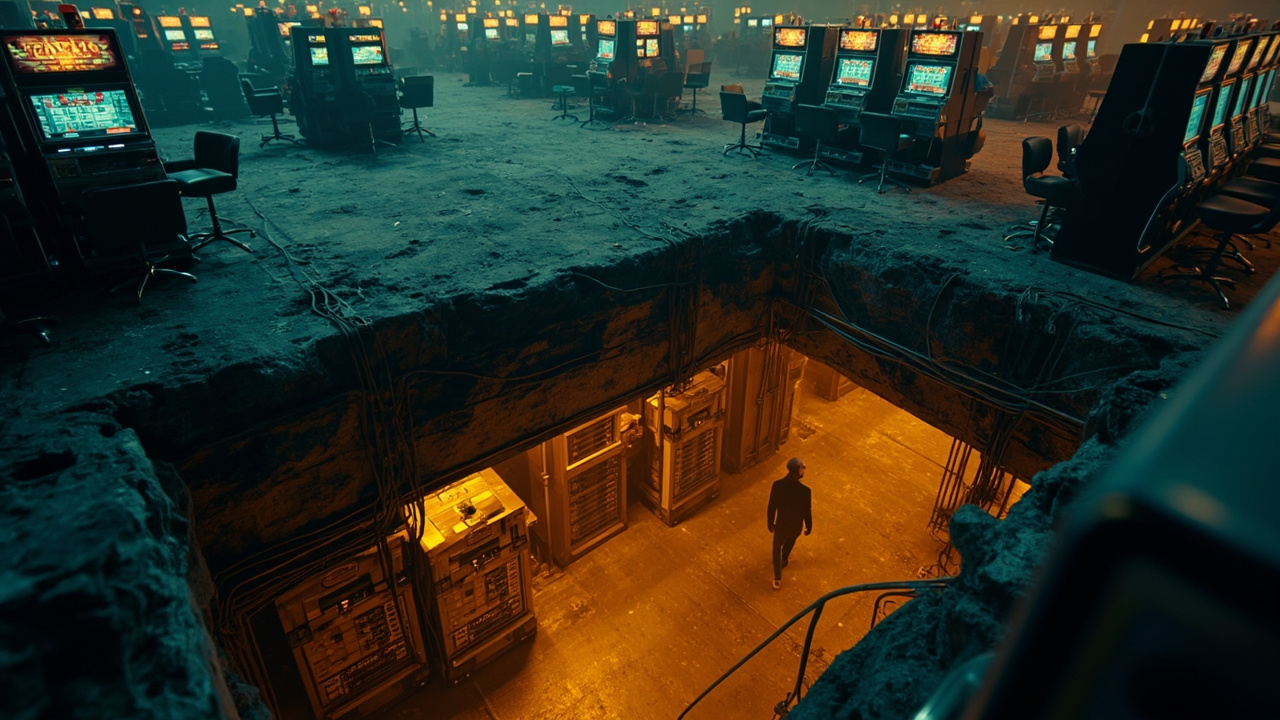
„Crypto is dead – only Bitcoin and stablecoins remain.”
– Tristan, editor-in-chief, Blocktrainer.de, July 2026
Part I: The Diagnosis (Which Is Correct)
Tristan is right. Let me say that clearly before I disagree with him, because the diagnosis deserves its due.
The 2025-2026 cycle killed the altcoin casino. Not wounded it – killed it. The ETH/BTC ratio collapsed 70% since late 2021. ADA and DOT, last cycle’s Top-10 darlings, are down 90%+ in dollar terms. The Trump family’s WLFI token and the $TRUMP memecoin turned the public perception of crypto from „uncollateralized speculative asset” into „uncollateralized speculative asset run by the president’s family for the president’s family.” The spot ETF approvals for ETH, XRP, SOL, and DOGE gave the sector approximately zero additional legitimacy, because legitimacy was never the bottleneck – demand was, and demand for tokens that do nothing and produce nothing is, unsurprisingly, finite.
Lyn Alden, quoted in Tristan’s piece, adds the one observation the maximalists prefer to skip: the rot is also a short-term drag on Bitcoin. The overlap in ownership is real. The bagholder who is down 90% on his alt bag and also holds BTC is a forced seller of BTC. The outsider who looks at the market and sees nothing but memecoins, presidential grift, and DeFi hacks does not say „ah, but Bitcoin is different” – he says „I’ll pass” and goes back to buying Nvidia. The maximalist claim that the altcoin collapse is purely bullish for BTC is the same kind of motivated reasoning that produced „flippening” predictions in 2021, just inverted. Both are wrong because both assume the market cares about your taxonomy. The market does not care about your taxonomy.
So the diagnosis is: crypto is dead, BTC + stablecoins survive. Tristan gets full marks for the autopsy.
The problem is the word „survive.”
What Tristan Misses: The Infrastructure That Was Never About the Token
Here is the part the maximalist frame cannot see, because the maximalist frame treats every non-Bitcoin chain as a failed currency and therefore as a failed project. That frame is correct about the currency. It is wrong about the project.
Ethereum is not a currency. Ethereum is a publicly funded R&D laboratory that accidentally issued a token. The token is down 60% from its high. The R&D is not.
What was built on Ethereum between 2020 and 2025, while everyone was watching the price chart and the monkey JPEGs, is an infrastructure layer that has nothing to do with speculation and everything to do with the actual engineering problems of decentralized systems:
Zero-knowledge rollups. The technology that lets one chain prove, cryptographically, that a computation was executed correctly without the verifier having to re-execute it. ZK-rollups were an academic curiosity in 2018. They were a working prototype in 2020. They were a production deployment on Ethereum mainnet in 2023. They are, as of 2026, the standard scaling path for the chain. That percolation – from paper to production to standard – took eight years. Nobody who was watching the ICO market in 2018 or the NFT market in 2021 would have noticed it happening, because it happened in the infrastructure layer, below the surface, in the part of the stack that does not have a price chart and does not need one.
Account abstraction (ERC-4337). The technology that lets a smart contract, rather than a private key, control a wallet. This is the difference between „my grandmother can use a self-custodial wallet” and „my grandmother will never use a self-custodial wallet.” It shipped in 2023. It is, as of 2026, still being integrated into consumer-facing products. The percolation cycle is three years and counting. The maximalist did not notice because the maximalist was counting the ETH price.
EIP-4844 blob space. The protocol upgrade that gave Ethereum a separate data-availability layer, cutting L2 transaction fees by 90%+ overnight. Shipped March 2024. The effect was immediate in the fee market and invisible in the narrative market, because the narrative market had already moved on to whatever the next casino game was.
These are not tokens. These are not narratives. These are load-bearing engineering advances that solve real problems in decentralized systems. They were built on Ethereum because Ethereum was the only chain with enough developer density and enough economic gravity to stress-test them at production scale. The fact that the ETH token is down 60% while the infrastructure built on top of it is up 1000% in capability is the central fact the maximalist autopsy cannot process.
The Two Satellites
Tristan mentions Solana (SOL) in passing as one of the coins that got a spot ETF and did not benefit from it. That is the price-chart view. The engineering view is different.
Solana is not a failed Ethereum competitor. Solana is a parallel computing experiment that happened to issue a token. The experiment was: can you build a single-state, high-throughput blockchain that processes transactions in parallel using a combination of Proof-of-History and Proof-of-Stake, and can you make it fast enough that consumer applications – not DeFi, not JPEGs, actual consumer applications with actual users doing actual things at actual latency – can run on-chain? The answer, as of 2026, is: yes, with caveats. The caveats are load-bearing. They are the kind of caveats that become papers, which become specifications, which become upgrades, which percolate into the main stack over the next cycle. Solana’s Firedancer validator client, written in C++ by the Jump Trading team, is a feat of systems engineering that has nothing to do with the SOL price and everything to do with the question „how fast can a blockchain actually go?” That question will be answered, and the answer will not stay on Solana.
BNB Chain is the other satellite. It is the chain nobody in the Western crypto discourse respects, because it is run by an exchange and because its origin story is „Binance needed a cheap chain for retail users.” Both of those things are true. Both are also irrelevant to the engineering. BNB Chain processed more transactions in 2025 than Ethereum and Solana combined, not because it is better but because it is where the actual users are – the users the maximalist dismisses as „casino gamblers” and the engineer recognizes as „the only stress test that matters.” The maximalist says: BNB is centralized, therefore worthless. The engineer says: BNB is centralized, therefore it works, and the fact that it works at the scale it works is data, and data does not care about your governance preferences.
Two satellites. Solana for speed. BNB for scale. Neither is a currency. Neither is a store of value. Both are test beds. Both are producing the engineering data that will, over the next cycle, percolate into the main stack the same way ZK-rollup data percolated into Ethereum over the last one.
Part II: The Prediction (Which Is Not What the Maximalist Thinks)
Here is the prediction. It is less cheerful than the maximalist’s prediction, because the maximalist’s prediction is that everything collapses into Bitcoin and that Bitcoin is therefore the winner. The maximalist is half right. Things are collapsing. The collapse is not producing a single winner. The collapse is producing a very small number of survivors and a very large number of corpses, and the corpses are still being produced, and the industry does not notice, because the industry is still confusing activity with life.
The Three Categories of the Dying
The crypto space looks alive because new projects are constantly pouring in. This is not life. This is a septic tank being flushed. The appearance of novelty is the mechanism by which the dying conceals itself. Strip away the launch announcements and the real picture crystallizes in three categories:
Category 1: The Eintagsfliegen. Pump-and-dump schemes dressed in the vocabulary of innovation. They launch with a white paper, a Discord, and a token chart that goes vertical for seventy-two hours and then flatlines. They serve no purpose. They solve no problem. They exist to extract capital from the desperate and the stupid and deposit it in the pockets of the issuers. The maximalist calls these „scams.” The engineer calls them „noise.” Both are correct. The Eintagsfliegen are not the interesting part of the dying. They are the dying’s background radiation.
Category 2: The Community Projects. These are the projects that survive the first thirty days because they have attracted a community. The community believes in the project. The community evangelizes the project. The community has Discord channels, governance votes, and a shared mythology about why the project matters. The project does not matter. The project solves nothing. The project offers no value that is needed by any real-world problem or any online product that could not exist without the project. The community is the product, and the community is consuming itself. These projects die slower than the Eintagsfliegen – months, sometimes years – but the trajectory is the same. They die because „we have a community” is not a value proposition. It is a demographic observation.
Category 3: The Product Projects. These are the projects that actually offer a product: settlement of real-world events on-chain, a game with collectibles, a digital service tied to smart contracts, a closed-loop economy where the token has a function inside the product. These are the only projects that are not, by definition, worthless. But here is the brutal part: even the product projects are mostly useless, because the blockchain they run on is mostly useless, and the blockchain they run on is mostly useless because the blockchain gives the user something the user never asked for.
The Uncomfortable Truth About Blockchains
A coin on a blockchain is useless unless a specific product needs it. An online trading card game needs its in-game currency. The cards are NFTs. The in-game events are smart contracts. The blockchain is the database that stores the ownership. This is a legitimate use case. But here is what the legitimate use case actually is: you are loading play money into a farming simulator. You did this with PayPal ten years ago. You are doing it with a blockchain now. The blockchain gives you „a pseudo-decentralized database in the background,” and the assurance this provides is – what, exactly? What does the player actually get from the blockchain that the player did not get from the centralized server?
The honest answer is: nothing the player needs. Either the player likes the game and plays, or the player does not like the game and does not play. The blockchain is invisible to the player. The blockchain is invisible because the blockchain is, for the vast majority of use cases, invisible by design – and invisible by design is the same thing as irrelevant by design.
Blockchains are and will forever be a fringe technology with limited use cases: closed-circle products (one game, one supply chain, one settlement layer), niche financial primitives (BTC as digital gold, stablecoins as payment rails), and the very small number of applications where the decentralization is the actual product, not a marketing feature. Outside of that fringe, blockchains are mostly useless. The 2010-2019 dream of blockchain-as-global-substrate – the dream that every transaction, every identity, every vote, every contract would run on a blockchain – is dead. It died because the users did not want it. The users wanted faster apps, cheaper payments, and better games. The blockchain did not make the apps faster, the payments cheaper, or the games better. The blockchain made all three more complicated and called the complication „sovereignty.” The users did not want sovereignty. The users wanted convenience. The users got convenience, from centralized providers, and the blockchain was left holding the bag of its own irrelevance.
The Lesson the Crypto Anarchists Learned the Hard Way
We learned it the hard way. All of us who came into this space between 2010 and 2019, who believed that cryptography and decentralized networks would change the relationship between the individual and the state, who thought that the technology itself would produce the political transformation – we learned the hard way.
Nobody cares about finance. That is why the poor stay poor. The financial literacy programs do not work. The self-custody wallets do not scale. The DeFi protocols do not onboard the unbanked. The unbanked do not want to be banked. The unbanked want to eat, and eating does not require a smart contract.
Nobody cares about freedom and privacy. That is why the people stay sheep. The sheep do not want to be shepherds. The sheep want grass. The shepherd who offers freedom gets ignored. The shepherd who offers grass gets followed. The democratic system runs on this asymmetry, and the politicians who bought their seats understand this asymmetry, and the sheep are milked and the wool is sheared and the shepherd goes home to the master who paid for the flock.
We crypto anarchists believed the technology would break the asymmetry. We were wrong. The technology was neutral. The asymmetry was not technological. The asymmetry was human. The technology could not fix the human, because the human did not want to be fixed.
What Libertaria Is Trying Instead
We have some thoughts in Libertaria about how to tackle this conundrum from a completely different angle. The angle is not „build a better blockchain.” The angle is not „issue a better coin.” The angle is: the cryptography matters, the blockchain does not, and the user should never know the cryptography is there.
Libertaria does not need a blockchain. Libertaria does not need a coin that replaces fiat. Libertaria needs cryptography – more of it, deeper, more pervasive, more invisible – and the cryptography needs to do its work without the user being asked to care about it. The user will not be asked to manage keys. The user will not be asked to sign transactions. The user will not be asked to understand what a zero-knowledge proof is. The user will be given a product that works, that is private by default, that is sovereign by construction, and that does not advertise any of these properties because advertising them is the surest way to ensure nobody uses them.
The pirate way. The privacy way. The freedom way. But this time, totally different. Not „educate the user about freedom” but „build a product that is free and let the user discover the freedom by using it.” Not „make the user care about decentralization” but „make the decentralization invisible enough that the user never has to care.”
Will it work? Nobody knows at this point. What we know is this: crypto as it was from 2010 to 2019 is dead. Every project that has survived needs to strap in and get useful to the world, or it will be washed away by the next pump – a pump that will be smaller than the last one, and shorter, and more obviously the death rattle of a sector that has run out of narratives and is running on fumes.
The casino is dead. Some of the plumbing survives. Most of the plumbing does not. What survives is the one thing the maximalist, the engineer, and the crypto anarchist can agree on: the cryptography. Not the blockchain. Not the token. The cryptography. The math that lets two strangers prove something to each other without trusting a third party. That math is not dead. That math has never been more alive. The question is whether anyone can build a product around it that the user actually wants to use. That is the only question that matters. That is the question Libertaria is trying to answer.
Markus Maiwald is a crypto anarchist who learned the hard way. He writes on sovereignty, cryptography, and the engineering of freedom at libertaria.blog. He holds BTC because BTC works. He reads the EIP repository because the engineering matters. He does not believe a blockchain will save the world. He believes the cryptography might, if the cryptography has the good sense to shut up and let the product do the talking.