Feminism as a Cult of Destruction: The Frankfurt School, Hegel's Dialectic, and the Politics of Negation
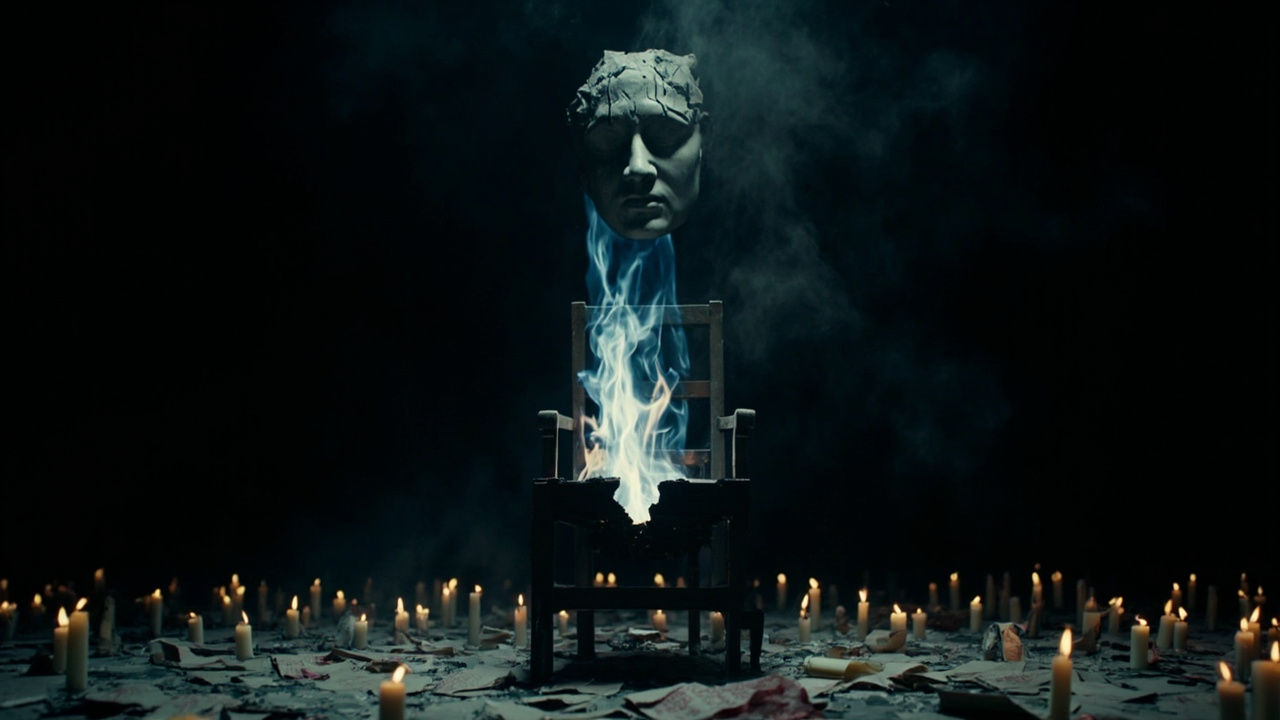
„The master’s tools will never dismantle the master’s house.“
– Audre Lorde
I. The Question You Were Not Supposed to Ask
Why do feminists make themselves deliberately unattractive?
It is the question you were not supposed to ask. The answer you are given depends on how you ask it. If you ask it with contempt, you will be told you are a misogynist. If you ask it with curiosity, you will be told the question is irrelevant. If you ask it with the analytical seriousness it deserves, you will be told that beauty itself is a patriarchal construct, that your perception of attractiveness is contaminated by the dominant ideology, and that you are not entitled to notice what every other adult on the planet has noticed since the invention of the human eye.
This is the move. Dodge the question. Pathologize the asker. Move on.
But the question does not move on. It stays. The phenomenon stays. The women stay – cutting their bangs in ways that no rational aesthetic preference would endorse, refusing basic grooming, performing an ugliness that announces itself as political, as if unattractiveness were a uniform and the uniform were the message. The ugliness is not incidental. It is deliberate. It is theatrical. It is a flag planted on the body.
And the flag tells you everything you need to know about the philosophy that planted it – because the philosophy operates the same way the ugliness does. It negates. It refuses. It does not build. It does not propose. It does not articulate a positive vision that anyone could defend on its merits. It negates what exists. It refuses the given. It insists that the given is irredeemable, that the existing world is a prison, that all women who do not embrace the negation are themselves instruments of the prison, and that only the negation – perpetual, total, never complete – leads anywhere worth going.
Where it leads is the question. The honest answer is: it does not lead. It negates. The negation is the destination.
II. From the Frankfurt School to Feminism: The Lineage
Modern feminism did not emerge from nowhere. It descends. The genealogy runs from Marx through Horkheimer and Adorno and Marcuse into Beauvoir and Millett, and from them into the intersectional feminism that dominates the universities, the media, and the politics of the contemporary left.
The lineage matters because the methods are inherited, even when the inheritors do not know they are using them.
The Frankfurt School – the Institute for Social Research, founded in 1923 – was a neo-Marxist response to a problem classical Marxism could not solve. Classical Marxism had identified the industrial proletariat as the revolutionary subject. The workers were supposed to rise, seize the means of production, abolish the bourgeoisie, and usher in the classless society. They did not rise. In the industrialized West, they integrated. They got jobs, mortgages, unions that bargained instead of revolted, televisions, washing machines, cars. The system did not fall. The workers did not revolt. They became, in the Marxist diagnosis, bought off.
This was an existential crisis for anyone who had bet everything on the Marxist program. Horkheimer, Adorno, and their heirs solved it by a move that was tactically brilliant and philosophically catastrophic: they kept the Marxist framework but moved the target. If the workers had failed to revolt because they were comfortable, the solution was to attack comfort itself – to identify all the things that made workers content, all the institutions that integrated them into the system, and to designate those institutions as instruments of domination.
The result was the expansion of the concept of domination from the economic to the cultural. The family. Marriage. Gender roles. Sexuality. Norms. Customs. Beauty standards. All of it. All of it was now understood as an apparatus of ideological control, keeping the proletariat soothed, distracted, integrated, and unable to recognize its own chains.
Marcuse, the most politically influential of the Frankfurt School theorists, deepened this analysis by relocating the revolutionary subject. If the industrial workers could not be relied upon to revolt, then someone else would have to. Marcuse nominated the marginal groups: racial minorities, sexual outsiders, students, and – crucially – women. The feminist movement, in Marcuse’s vision, was not merely a women’s rights movement. It was a revolutionary vehicle. The liberation of women was not an end in itself. It was a means of overthrowing the performance-and-competition principle that, in Marcuse’s analysis, was the foundation of capitalist society itself.
Here is the sleight of hand. Marcuse argued that women, by their very nature, embodied the antithesis of capitalist values. Care. Solidarity. Receptivity. Sensibility. Non-violence. Tenderness. These „feminine qualities“ were, in Marcuse’s telling, the negation of aggressive, competitive, exploitative masculine qualities – and therefore the negation of capitalism itself. Socialism, as the qualitative other of capitalism, had to be feminine. The liberation of women was the path to the liberation of mankind.
This is the founding move of second-wave feminism. It is not a demand for equal rights, equal pay, equal opportunity under the existing system. It is a demand for the negation of the system – through the body of woman as the embodiment of negation.
III. The Gnostic Cult
Strip away the academic apparatus and you find something older.
The feminist worldview – at least the dominant strand of it, the one taught in the gender studies departments and practiced in the activist organizations – is not new. It is gnostically ancient. It operates on a structure that predates Marxism by eighteen centuries, predates Christianity by two, and looks remarkably similar to the heresies the early Church fathers spent their lives refuting.
The structure is this: there is a true state. The world has fallen away from it. The fall has produced a corrupted order that the gnostic calls the present. The present is irredeemable within its own terms. The only path to the true state is the rejection of the present. The rejection must be total. The negation must be complete. The agents of negation are the awakened – those who have seen through the corruption. Those who have not yet seen through it are not opponents. They are victims. Victims of false consciousness. Captives of the fallen order. And those who actively defend the fallen order are not merely mistaken. They are enemies of the true.
This is the structure of ancient Gnosticism. It is the structure of Marcionism, which rejected the Old Testament God as a demiurge. It is the structure of Manichaeism, which divided reality into light and darkness. It is the structure of Catharism, which taught that the material world was created by an evil god and that the pure spirit must escape it.
And it is the structure of modern critical theory, which teaches that the existing social order is a Verblendungszusammenhang – a totality of illusion – and that the people who do not recognize this are not wrong but indoctrinated, and that the people who actively defend it are not mistaken but enemies.
Simone de Beauvoir – student of Sartre, ally of the postwar French Marxist intelligentsia – set the theological structure in explicit form in The Second Sex (1949). Women are not born women. Women become women through socialization. The „natural“ order of femininity is therefore a construction – a fallen order – and the liberation of women requires the dismantling of every category that constitutes the fallen order. Marriage. Motherhood. The family. The body. Beauty. Even the binary itself. All of it must go, because all of it belongs to the fallen world.
Kate Millett’s Sexual Politics (1970) added the Marxist class frame. Patriarchy is a system. It operates like capitalism. It exploits. It alienates. It is reproduced through false consciousness. The feminist revolution is therefore structurally analogous to the proletarian revolution: the awakening of the enslaved, the destruction of the oppressor’s institutions, the construction of a new society on the ruins of the old.
Marcuse’s 1974 Stanford lecture Marxism and Feminism tied the knot. There is no path to women’s liberation through the existing system. Reform does not work because reform preserves the system. Integration does not work because integration legitimates the system. The only path is the Great Refusal – the wholesale rejection of the existing order, including its values, its norms, its definitions, its beauty standards, its gender categories, and ultimately its grammar.
This is what you are looking at when you look at a woman who has cut her bangs in a way no aesthetic preference would endorse and refuses to shave her legs. She is not making a fashion choice. She is performing the Great Refusal. She is negating. She is saying: I will not be beautiful on your terms, because your terms are the terms of the fallen order, and the negotiation with the fallen order is itself a form of subjection.
The ugliness is not a bug. It is the feature.
IV. The Dialectic as Operating System
James Lindsay once observed that Hegel’s dialectic is the operating system of the left, and has been for two hundred years. The observation is precise.
The dialectic is the mechanism by which the negation acquires the appearance of progress. It does this through a three-step structure: thesis, antithesis, synthesis. The existing state is the thesis. The opposition is the antithesis. From their collision, a new state emerges: the synthesis. The synthesis then becomes a new thesis, which provokes a new antithesis, and the process continues until – in the Hegelian climax – the Absolute is reached.
This structure is not merely a description of how change happens. It is a prescription for how change must be engineered. You do not merely allow the antithesis to arise. You manufacture it. You identify the existing thesis – the current order, the existing norms, the established categories – and you position yourself as the antithesis. You negate. You refuse. You perform the refusal in every available domain: aesthetic, sexual, familial, linguistic, institutional. You declare that the existing order is the problem. You declare that the negation is the solution. You declare that the synthesis – the new world – will emerge from the collision.
But the dialectic has a property that its users rarely advertise. It does not actually arrive. The synthesis never permanently resolves the contradiction. It simply becomes the new thesis, which requires a new antithesis, which produces a new synthesis, which becomes a new thesis. The process is endless. The negation is endless. The revolution is permanent.
This is the deepest truth about the dialectic as the left uses it: the process is the destination. The Great Refusal is not a means to a liberated future. The Great Refusal is the liberated future. The negation is the goal. The contradiction is the point.
When you understand this, you understand everything else.
You understand why feminists cannot articulate what the post-revolutionary society looks like. There is no post-revolutionary society. The revolution does not end. The negation continues. The dialectic continues. To articulate a final destination would be to commit the sin of closure – of accepting that some configuration of the world is good enough, that some configuration of beauty is beautiful, that some configuration of gender is real, that some configuration of family is legitimate. The dialectic cannot tolerate closure. Closure is the death of negation. The dialectic requires that every synthesis be immediately problematized into a new thesis. The engine runs on conflict. Peace is its enemy.
You understand why feminists cannot tolerate dissent from other women. A woman who says she likes being a wife, a mother, a homemaker – a woman who says she is happy in the fallen order – is not merely expressing a different preference. She is confessing that the dialectic has failed in her case. She is confessing that the negation did not reach her. She is confessing that the system she is supposed to find oppressive is, in fact, the system she has chosen and does not wish to leave. For the dialectic, this is intolerable. The woman who confesses happiness in the fallen order is herself an instrument of the fallen order. She is a collaborator. She is, in the precise technical language of the Frankfurt School, in false consciousness. She does not know she is oppressed. She has not yet been awakened. She needs to be re-educated. Or, if re-education fails, she needs to be marginalized, silenced, or expelled from the legitimate discourse.
You understand why feminists attack beauty. Beauty is the most powerful argument for the existing order. A beautiful woman, comfortable in her beauty, beloved for her beauty, chosen for her beauty, is living proof that the existing order can produce happiness. The dialectic cannot tolerate this proof. The beautiful woman must therefore be either re-educated – taught that her beauty is a patriarchal trap – or negated – stripped of her beauty, denied the legitimacy of her beauty, deprived of the social capital her beauty would otherwise generate. The negation of beauty is the negation of the most visible evidence that the fallen order can be habitable. The negation of beauty is the dialectic at work.
You understand why feminists attack the family. The family is the most stable institution of the existing order. The family is where the fallen order reproduces itself. The family is where the patriarchal consciousness is transmitted from one generation to the next. The family is therefore the primary target of the dialectic. Beauvoir said it explicitly: to overthrow capitalism and the patriarchy, one must abolish the family. Women must refuse the housewife-and-mother ghetto. The family must be replaced.
You understand why feminists attack the category of woman itself. If the dialectic requires that every synthesis be problematized, then the synthesis of „woman“ – the stabilized category, the biological and social form – must be problematized too. The proliferation of gender identities is not a concession to human diversity. It is the continuation of the dialectic. Every new gender identity is a new antithesis. Every new pronoun is a new refusal. Every new category is a new front in the permanent revolution against the existing order.
You understand everything now. Or you understand enough.
V. The Master’s Tools Will Never Dismantle the Master’s House
Audre Lorde said it. The black feminist said it in 1979. The master’s tools will never dismantle the master’s house. They may permit you, for a moment, to beat him at his own game. But they will never permit you to bring about genuine change.
The Frankfurt School heard this – or thought it heard this – and concluded that genuine change therefore requires the destruction of the master’s tools. The language. The categories. The institutions. The beauty. The family. The grammar. All of it contaminated. All of it corrupt. All of it in service of the fallen order.
The conclusion was not liberation. The conclusion was silence.
Adorno, the most consistent of the Frankfurt School theorists, articulated the impossibility most honestly. There is no right life in the wrong one. There is no use of the master’s tools for the dismantling of the master’s house. There is therefore no program. There is no destination. There is only the negation – and the negation cannot even describe itself without using the language of the oppressor.
Marcuse acknowledged the problem and embraced it. His critical theory, he said proudly, promises nothing. It shows no success. It remains negative. By promising nothing and showing no success, it remains faithful to those who have given their lives to the Great Refusal without hope.
Read that again. Without hope. Marcuse’s philosophy is explicitly, proudly, defiantly without hope. The negation is not in service of a better future. The negation is its own reward. The revolutionary is not working toward liberation. The revolutionary is performing the negation because the negation is all that is left. The future does not exist. The present is irredeemable. The only honest act is the refusal.
This is what you are looking at when you look at contemporary feminism. You are looking at a movement whose intellectual godfathers explicitly, proudly, defiantly disclaimed hope. A movement whose founding gesture is negation. A movement whose program is the absence of a program. A movement whose destination is the absence of a destination.
It is a cult. It is a cult of destruction. It is a cult that has replaced the Marxist proletariat with the feminist body, replaced the bourgeois oppressor with the patriarchal oppressor, replaced the class struggle with the gender struggle, and kept the methods identical: the dialectic, the false consciousness, the Great Refusal, the permanent revolution, the impossibility of articulation, the explicit refusal of hope.
The cult cannot articulate what it is for. It can only articulate what it is against. Beauty is against. The family is against. The category of woman is against. The binary is against. The existing order is against. The existing language is against. The existing institutions are against. The existing selves are against.
What remains? What is left after the negation completes its work? What world does the dialectic build?
Nothing. The dialectic does not build. The negation does not create. The Great Refusal is its own justification. The cult of destruction is a cult of destruction.
VI. The New Western Maoism
Mao understood. Mao understood the dialectic before the Frankfurt School gave it the academic packaging. Mao understood that the negation is a weapon. Mao understood that the family must be attacked. Mao understood that the old must be destroyed. Mao understood that the people must be re-educated. Mao understood that the categories must be destabilized. Mao understood that the dissenters must be silenced. Mao understood that the intellectuals must be sent to the countryside to be corrected by the peasants. Mao understood that the old culture must be obliterated and the new culture must be invented from the negation of the old.
The Cultural Revolution was Mao’s application of the dialectic to a whole society. It was a deliberate, methodical, systematic attempt to destroy the old order – the four olds: old ideas, old culture, old customs, old habits – so that the new order could emerge from the negation.
It was a catastrophe. The famine that followed killed tens of millions. The re-education destroyed a generation of intellectuals. The struggle sessions humiliated and broke people who could have served the new China. The destruction of temples, books, and art destroyed much of China’s cultural inheritance. The Cultural Revolution was, by any honest accounting, one of the great catastrophes of the twentieth century.
And Mao knew. Mao knew what he was doing. Mao knew that the destruction was the point. The destruction was the negation. The negation was the dialectic. The dialectic was the method. The method required the destruction. The destruction was the program.
Look around you.
The contemporary Western left, particularly the intersectional feminism that dominates the universities, the media, and the activist organizations, has imported the Cultural Revolution wholesale. The methods are identical. The categories are identical. The targets are identical. The rhetoric is identical. Even the rhetoric of the struggle session – the public accusation, the public humiliation, the public confession, the public re-education – has been imported and is now deployed on social media daily.
The targets have shifted. The old four olds were Chinese. The new four olds are Western. Old ideas: the nuclear family, the gender binary, the beauty standards, the meritocracy. Old culture: the Western canon, the inherited traditions, the national myths. Old customs: the holidays, the rituals, the inherited practices that bind a people to its past. Old habits: the ways of speaking, the ways of relating, the ways of seeing that constitute a Western person.
All of it must go. All of it is the fallen order. All of it is the master’s house. All of it must be destroyed by any means necessary – and the means will be justified by the dialectic, by the false consciousness, by the Great Refusal, by the impossibility of articulating an alternative, by the explicit and proud refusal of hope.
VII. The Self-Fulfilling Prophecy
The worst part is not the ideology. The worst part is what the ideology does to the people caught in it.
The feminist program, as practiced in its dominant contemporary form, does not liberate women. It damages them. It teaches them that their perceptions of happiness are false. It teaches them that their choices are products of false consciousness. It teaches them that their preferences for traditional femininity are instruments of patriarchal domination. It teaches them that their attraction to men is a form of submission. It teaches them that their enjoyment of beauty is internalized objectification. It teaches them that their desire for motherhood is indoctrination. It teaches them that their love for their husbands is stockholm syndrome.
Every pleasure becomes a pathology. Every choice becomes a symptom. Every preference becomes a product of oppression. Every relationship becomes a power dynamic. Every disagreement becomes an instance of patriarchal violence.
This is psychologically catastrophic. It is, in fact, the exact opposite of liberation. It is the production of permanent unhappiness, permanent suspicion, permanent alienation – the permanent inability to experience one’s own life as anything other than a cage.
The women caught in this program become unhappy, and then they blame the unhappiness on the system they were already primed to blame, and then they intensify the program, and then they become more unhappy, and then they blame the system more, and then they intensify the program more. The loop is self-reinforcing. The prophecy is self-fulfilling. The woman who was taught that her happiness is false discovers that her happiness is, in fact, gone – and concludes that the program was right all along.
This is not liberation. This is the precise opposite of liberation. This is the conversion of a free woman into an instrument of her own oppression. The feminist program, as practiced in its dominant contemporary form, is the most efficient machine ever invented for the production of female misery.
It works exactly as designed.
VIII. The Fraudulent Innerness
The feminist program claims to defend women’s autonomy. Its actual function is the destruction of women’s autonomy. The contradiction is not accidental. It is structural.
The program tells women what they must think. It tells women what they must want. It tells women what they must feel. It tells women that their disagreements are products of false consciousness. It tells women that their preferences are products of indoctrination. It tells women that their happiness is a symptom of their own oppression. It tells women that their unhappiness is a sign of their awakening. It tells women, in short, that they cannot be trusted to know what is good for them – and that the program knows what is good for them better than they do.
This is not autonomy. This is the precise opposite of autonomy. This is paternalism in its purest form – paternalism directed at women by women, which makes it more difficult to recognize but no less real.
The program is paternalistic toward women in exactly the way the patriarchal order was paternalistic toward women. The patriarchal order told women what they could be. The feminist program tells women what they must be. The patriarchal order punished women who deviated from the prescribed roles. The feminist program punishes women who deviate from the prescribed roles. The patriarchal order silenced dissenters. The feminist program silences dissenters. The patriarchal order claimed to know what was best for women. The feminist program claims to know what is best for women.
The continuity is unbroken. The method is identical. The only difference is the direction of the prescription. The patriarchal order prescribed domesticity. The feminist program prescribes liberation. Both deny the woman the right to choose for herself.
And when a woman chooses wrongly – when she chooses the patriarchal prescription – she is condemned as a collaborator, an internalizer, a victim of false consciousness. And when she chooses wrongly in the feminist prescription – when she chooses the family, the husband, the children, the home, the beauty, the tradition – she is condemned as a collaborator, an internalizer, a victim of false consciousness.
The condemnation is the same. The vocabulary is the same. The psychology is the same. The mechanism is the same. The program is the program.
IX. What It Costs
The road to hell is paved with good intentions.
I do not believe that most feminists – most of the women and men who operate within the contemporary feminist movement – are evil. I do not believe they wake up in the morning and choose destruction. I do not believe they consciously seek to damage the women they claim to defend.
I believe most of them are sincere. I believe most of them genuinely want women to flourish. I believe most of them have absorbed a worldview that promises flourishing and delivers damage. I believe most of them are trapped in a system of ideas that cannot deliver what it promises and cannot admit that it has failed.
This is what makes the program dangerous. It is not a conspiracy. It is a worldview. It is a worldview that has captured institutions – universities, media, HR departments, NGOs, government agencies – and that operates through those institutions with the moral certainty of the convinced. The people who operate it are not evil. They are indoctrinated. They have absorbed the Frankfurt School’s framework so deeply that they cannot see the world except through it. Their perceptions are filtered. Their judgments are predetermined. Their conclusions are foregone. They are not deceivers. They are deceived.
But the consequences are real. The women damaged by the program are real. The families destroyed by the program are real. The children raised without fathers by women who were taught that fathers are instruments of domination are real. The women who cannot experience their own happiness as legitimate because they have been taught that their happiness is a symptom of their oppression are real.
And the catastrophe that is coming – the demographic catastrophe, the civilizational catastrophe, the civilizational self-hatred that will leave the West unable to reproduce itself or defend itself or even want to defend itself – is real.
The intentions are good. The consequences are catastrophic. The intentions being good makes the consequences worse, because the program cannot be reformed by its critics without first being acknowledged by its proponents – and the proponents cannot acknowledge the damage without abandoning the program, and they cannot abandon the program without abandoning the worldview, and they cannot abandon the worldview without admitting that their entire moral identity has been built on a lie.
This is why the program cannot be reformed from within. This is why it must be replaced from without. This is why the alternative institutions – the sovereign families, the sovereign communities, the sovereign schools, the sovereign media – are not luxuries. They are necessities. The program will not correct itself. The program cannot correct itself. The program is the program.
Strategic Imperatives
See the lineage. This is not feminism. This is the Frankfurt School in a new costume. The methods are inherited from Marcuse. The dialectic is inherited from Hegel. The false consciousness is inherited from Marx. The cult structure is inherited from ancient Gnosticism. The Cultural Revolution is imported wholesale from Mao. Name the lineage. The disguise only works in the dark.
Refuse the negation. The dialectic cannot arrive. The negation does not build. The Great Refusal is not a means to a liberated future. The Great Refusal is the liberated future. Refuse to participate in a process whose only destination is the continuation of the process. Demand a destination. The demand itself is the refusal of the dialectic.
Defend the family. The family is the primary target. The family is also the primary defense. The family is where the transmission happens. The family is where the inheritance lives. The family is where the children are taught what is beautiful, what is true, what is good, what is real. Defend it. Not as a political position. As a civilizational act.
Protect the children. The girls who are taught that their happiness is a symptom of their oppression will grow into women who cannot experience their own lives as anything other than a cage. The boys who are taught that their masculinity is a pathology will grow into men who cannot defend their own families or their own civilization. The program is intergenerational. The defense must be intergenerational. Teach your children what beauty is. Teach your children what family is. Teach your children what femininity and masculinity are. Teach them in your living room, in your kitchen, at your table. The transmission happens face to face or it does not happen at all.
Build the parallel structures. The universities are captured. The media is captured. The HR departments are captured. The cultural institutions are captured. They will not self-correct. Exit them. Build alternatives. Fund them. Staff them. Make them superior. The capture of the institutions is not permanent. The institutions are staffed by people. People can be replaced. The replacement is slow. The replacement is the work of a generation. Begin.
The dialectic promises you everything. It delivers only the negation. The negation is not a path. The negation is the destination. Mao knew. Marcuse knew. The women cutting their bangs in ways no aesthetic preference would endorse know – even if they cannot articulate it. They are performing the dialectic. They are performing the Great Refusal. They are performing the cult of destruction. They are not liberating themselves. They are participating in the destruction of the conditions under which liberation was possible. The master’s tools will never dismantle the master’s house. But the master’s tools can demolish your house. And that, in the end, is all the cult of destruction has ever wanted.
Markus Maiwald is the founder of Libertaria. He writes on political philosophy, sovereignty, and the architecture of exit. He read the Frankfurt School so you do not have to – but you should anyway, because the lineage is public and the cult is real and the program is running.