Why Exitarianism Needed The Oath
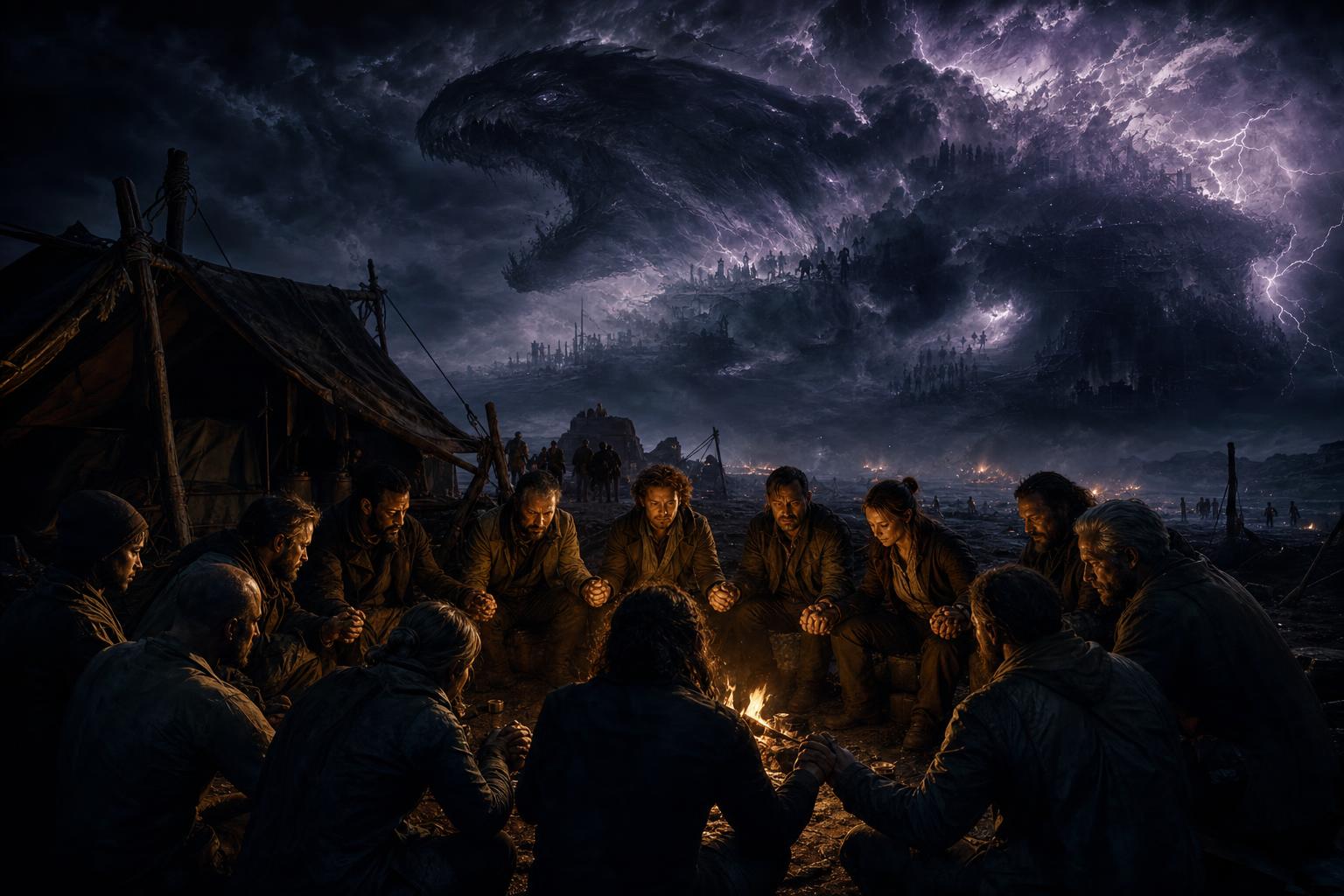

Why Exitarianism Needed The Oath
Future Warfare Is Against the Population, The Bund Is the Answer
Markus Maiwald · Libertaria Essays · April 2026
TL;DR
The power goes out at 2am. The heater dies. The kids are hungry. The broadcast says it is your fault for resisting.
Future warfare is no longer primarily about killing soldiers or even bombing factories. It is about turning the population against itself. Making ordinary people so cold, hungry, frightened, and exhausted that they beg for the return of the cage that was strangling them.
That is the real attack surface of the 21st century.
And that is why Exitarianism needed The Oath.
Not because the Foundation was wrong. Not because the Manifesto was weak. Not because the Framework failed.
Because logic does not hold the line when the lights go out.
The Bund does.
The New War Is Fought Through Misery
A kitchen somewhere in Europe. The shelves are empty. The phone buzzes. A message: comply, and the pain stops.
The old model of war was simple: destroy the army. The 20th century upgraded the formula: destroy the factories, the roads, the civilian base that sustains the army.
The 21st century goes one step deeper.
You do not need to conquer the population. You need to make the population turn on the people trying to resist.
Cut the power. Freeze the accounts. Block the supply lines. Make life unbearable. Then whisper the same poison into every hungry ear:
This is your leaders’ fault. This is your dissidents’ fault. This is your Chapter’s fault. Comply, and the pain stops.
That is population weaponization.
The civilian becomes the projectile. The family becomes the battlefield. The neighbour becomes the pressure point.
That is future warfare.
The Weak Point in Rational Systems
It is 3am. The heater is dead. Your daughter asks when the lights come back on. You do not reach for a theorem. You reach for the person next to you.
Exitarianism had the architecture. It had the blade. It had the theorem. It had the protocol instinct that almost everyone else still lacks.
But there was a gap.
It was a philosophy that spoke clearly to the architect, the strategist, the systems builder. It spoke less clearly to the human being standing in the kitchen at 3am with empty shelves, a dead heater, and a child asking when the lights come back on.
At that moment, nobody reaches for mechanism design. Nobody survives on diagnostics. Nobody charges the tank for a theorem.
At that moment, one question remains:
Who is still standing next to me?
That is the question The Oath answers.
Why The Door Was Not Enough
Nobody bleeds for a hinge. Nobody fights for an architecture diagram.
Exitarianism already had the right civilizational symbol: the door. The closed door of the Settler. The open road of the Pilgrim. The axiom that no one should be locked into a system they did not choose.
Correct. Necessary. Still insufficient.
Humans do not bleed for symbols. They bleed for their people. For the ones whose children they know by name. For the ones whose table they have eaten at. For the ones they swore not to abandon.
That is the correction.
Not the door as symbol. The Bund as the human reality underneath. The covenant between those who keep each other’s doors.
The Bund
The Oath does not tell people to die for a flag. It does not ask for martyrdom. It does not promise paradise.
It says something older, harder, and far more binding:
Your door is my door. Your children are my children. Your fight is my fight.
That is the Bund.
Not nationalism. Not theology. Not obedience. A voluntary covenant between people who choose each other and then refuse to fold when pressure comes.
This matters because the 21st century attacker is counting on one thing above all else: that the population will eventually decide that surrender is cheaper than solidarity.
The Bund is the mechanism that makes that calculation fail.
Not because suffering disappears. Because betrayal becomes more expensive than hunger.
The Difference Between Fanaticism and Founding
States send teenagers to die for flags. Religions send martyrs to die for heaven. Empires spend human beings like ammunition.
Every civilization under pressure discovers the same ugly truth: people can endure extraordinary suffering if they believe it means something. That is why states, religions, and empires all reach for eschatology. They need a story strong enough to make sacrifice feel purposeful.
The dark version of that story is fanaticism. A cleric, party, or state teaches the young to die for abstraction.
The Exitarian answer is different.
The Oath is not a death cult. It is not martyr-manufacturing. It is not transcendence-through-obedience.
It is a founder’s covenant.
You do not hold because heaven demands it. You hold because you made a promise to people you refuse to abandon. You suffer not for annihilation, but for the survival of the thing you are building together.
That is the difference between martyrs and founders.
The martyr is consumed. The founder endures.
Why This Matters Now
When the pressure hits, the power is out, the food is gone, and the broadcast says it is your fault, the first thing that keeps a system alive is whether 10 to 20 percent of its people refuse to fold.
The protocol matters. The mesh matters. The economics matter. The exit ramps matter.
But when the pressure wave hits, the thing that keeps a system alive is not the infrastructure. It is the people who refuse to fold.
Not because they were ordered to. Not because they were hypnotized. Not because they worship suffering.
Because they know what they owe each other.
That is what The Oath adds to Exitarianism. It is the missing fire. The human answer to the question:
Why should anyone hold the line when everything hurts?
Answer:
Because we swore we would.
Read The Oath
If the Foundation is the forge and the Convergence is the trajectory, then The Oath is the fire.
It is the text that explains what we owe each other while we get there.
And in an age where warfare increasingly targets the will of the population rather than the body of the army, that is not ornament.
That is survival doctrine.
Read next: The Oath / Der Schwur